The Roof Takes 3 to 6dB. This Loft TV Aerial for Weak Freeview Signal UK Gives Back 6 to 8.
Two people fit the same aerial in the same kind of loft. One retunes, finds 150-odd channels and forgets about it. The other gets a blank screen and puts the word rubbish in a review title. The gap between them is almost never the aerial.
- Why a Loft TV Aerial for Weak Freeview Signal UK Homes Has to Be an Outdoor One
- 40% Signal, Then 91%. He Did Not Move the Aerial, He Turned It.
- The Transmitter You Are Aiming At Decides This, Not the Aerial
- The 4G Filter Is Doing Real Work in a British Loft
- The Coax Has Moulded Plugs on Both Ends, and in a Loft That Is a Nuisance
- The Indoor Panel, This Kit, the Screwfix Yagi, or a Man With a Ladder
- The Flimsy Plastic Splits Into Two Complaints, and a Loft Only Cures One
- Five Things to Do Before You Decide It Is Faulty
- Who Gets 150 Channels, and Who Gets a Refund
Two people fit this aerial in the loft. One retunes the telly, finds 150-odd channels and never thinks about it again. The other gets a blank screen, tries everything, and writes a one-star review with the word rubbish in the title. Same aerial, same box, same ten metres of coax.
That gap is the whole story here, and it is not the lottery it looks like. Go through the 94 most recent reviews and a pattern falls out almost immediately: 13 of those reviewers describe fitting it in a loft or an attic, and 12 of the 13 gave it five stars. The one and two-star reviews, all 21 of them, come from somewhere else. Not a single one mentions a loft.
So what is going on? The short version is physics, and it is worth understanding before you order, because it decides whether this is the cheapest fix available to you or a wasted Saturday. A loft install costs you signal before the aerial ever sees it. This aerial's own spec panel promises 6 to 8dB of gain to buy that loss back. Whether the maths works out in your house comes down to two things: which transmitter you are pointing at, and which way up the rods are.
Why a Loft TV Aerial for Weak Freeview Signal UK Homes Has to Be an Outdoor One
Start with the thing nobody selling you a loft aerial wants to lead with. Your roof is in the way.
Tiles, battens and roofing felt all absorb UHF, and the rule of thumb installers work to is that the same aerial loses somewhere around 3 to 6dB when you move it from the roof into the loft below. If your roof has foil-backed sarking felt, or foil-backed insulation between the rafters, the loss is far worse, because you have effectively hung a metal sheet between the transmitter and your aerial. That is not a small tax. It is the difference between a picture and a black screen.
Which is exactly why the standard answer for a loft in a weak-signal area is a proper outdoor Yagi rather than one of those flat indoor panels that sit behind the telly. You are not putting an outdoor aerial in the loft because it is tough. You are putting it there because it has gain and it is directional, and you need both to pay back what the roof takes.
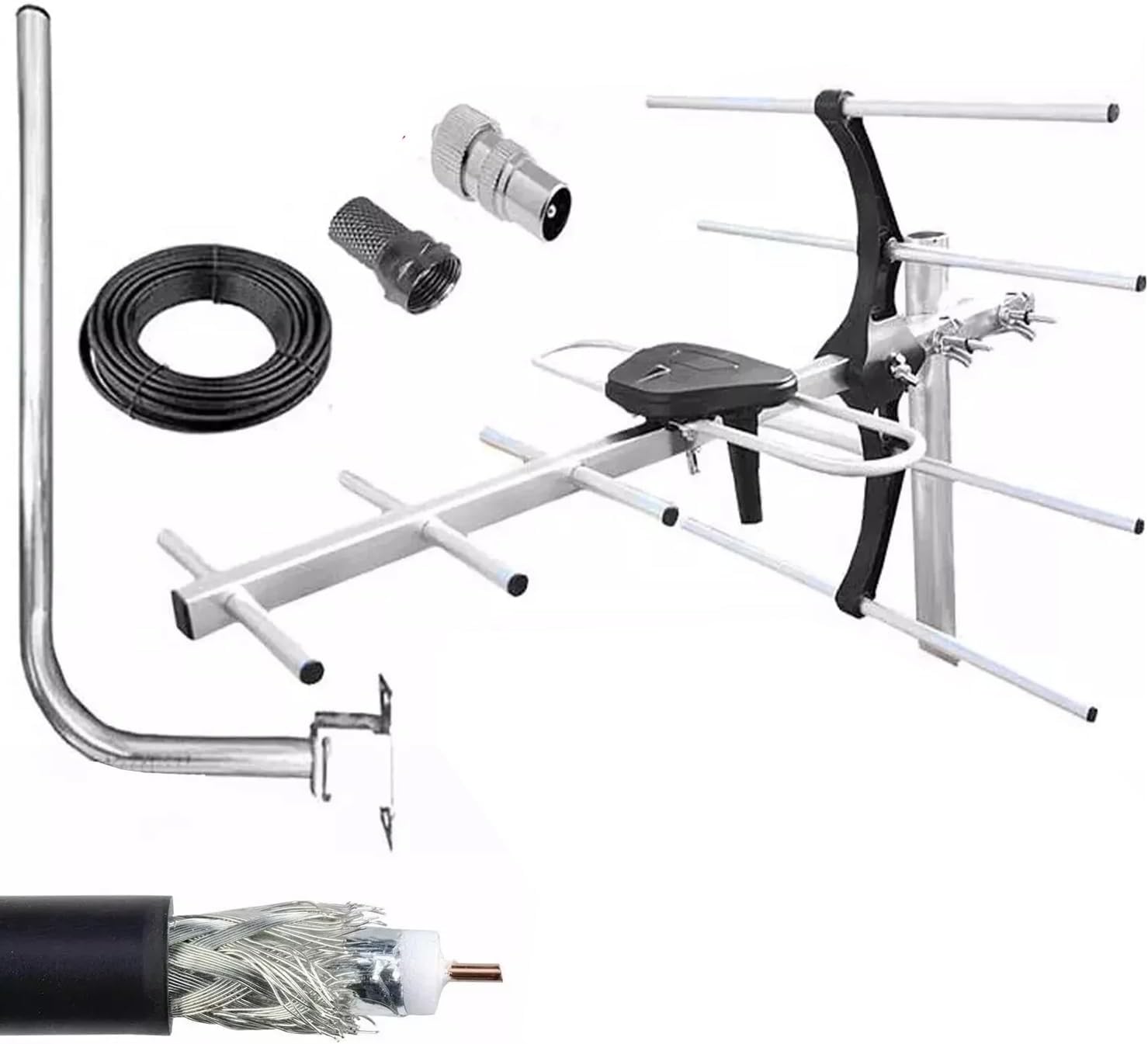
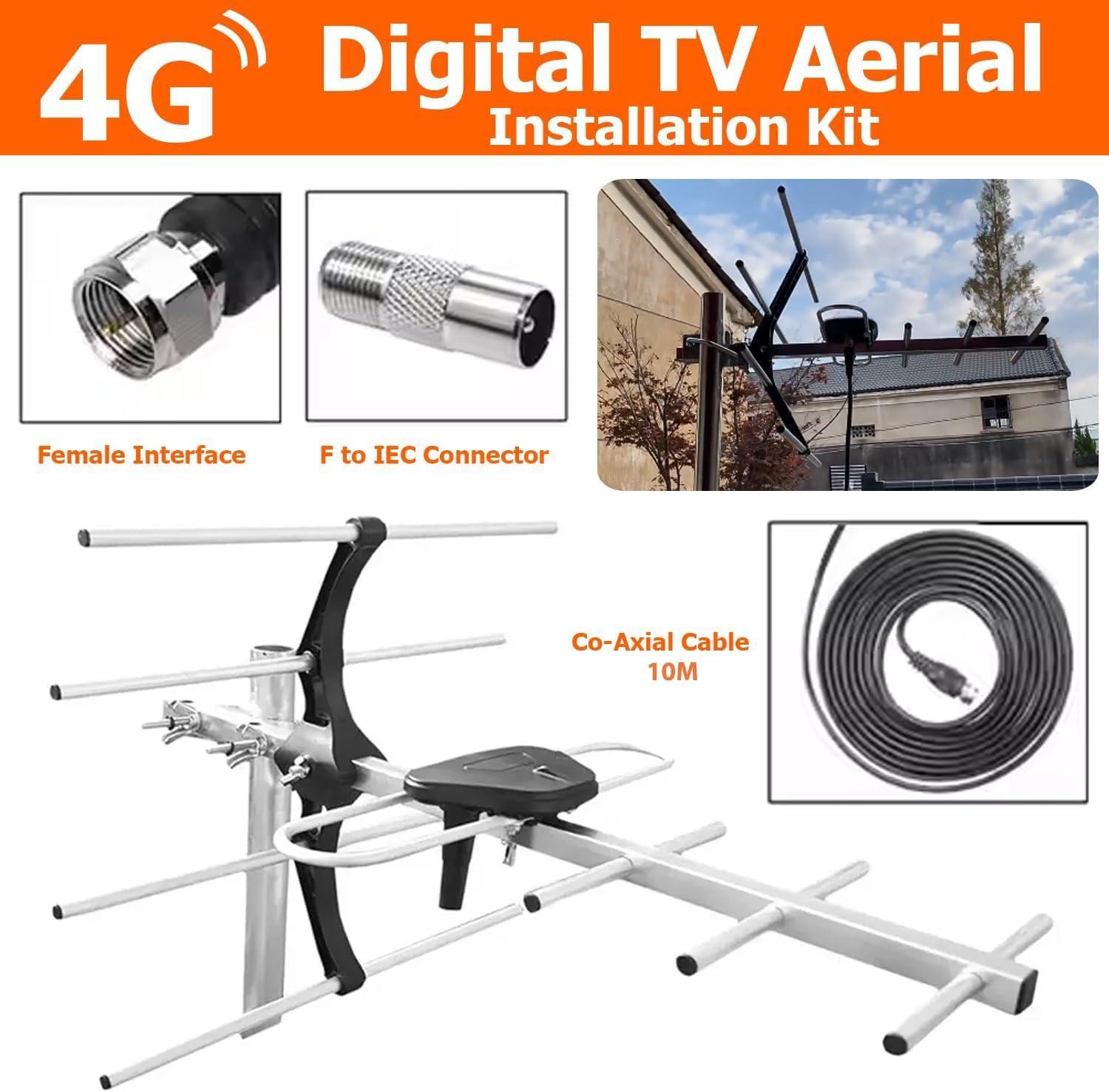
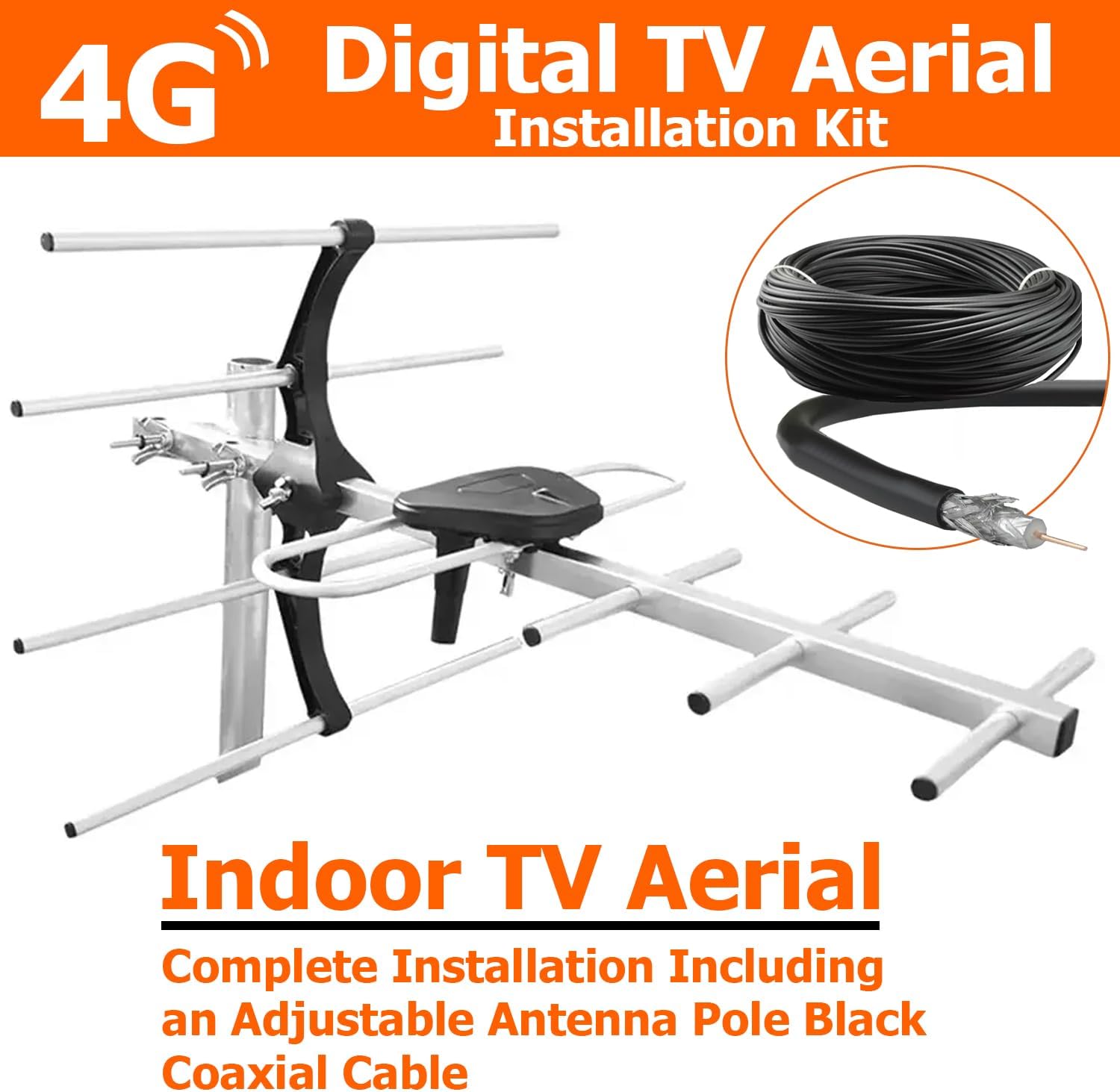
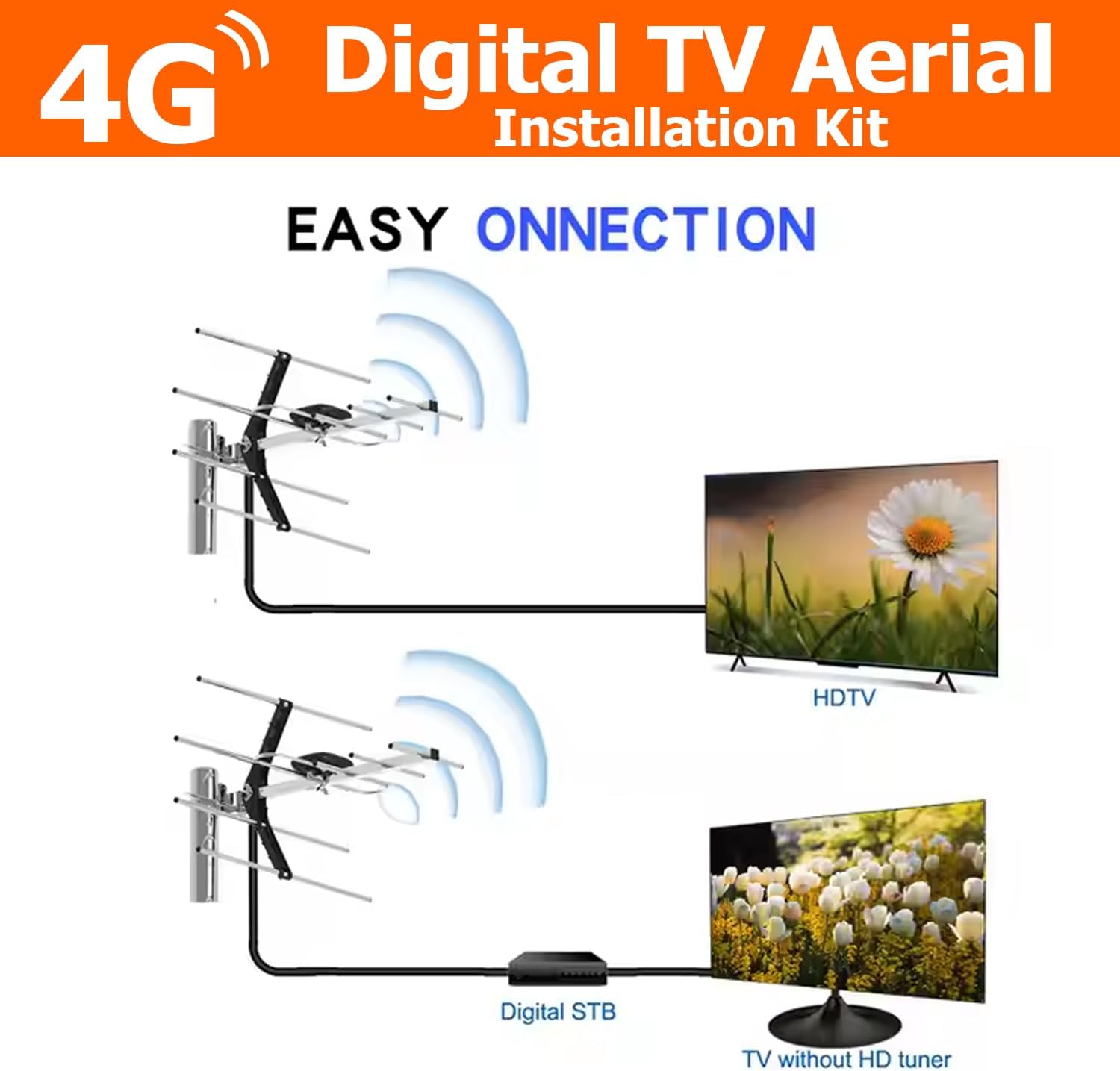
This ATEK kit is that shape of thing. A UHF Yagi with a reflector at the back, an adjustable wall pole, U-bolts, anchor bolts and a 10 metre run of RG6 coax, with a filter board built into the head. The listing sells it for the roof, the wall, the garage and the loft, and it is priced like a takeaway.
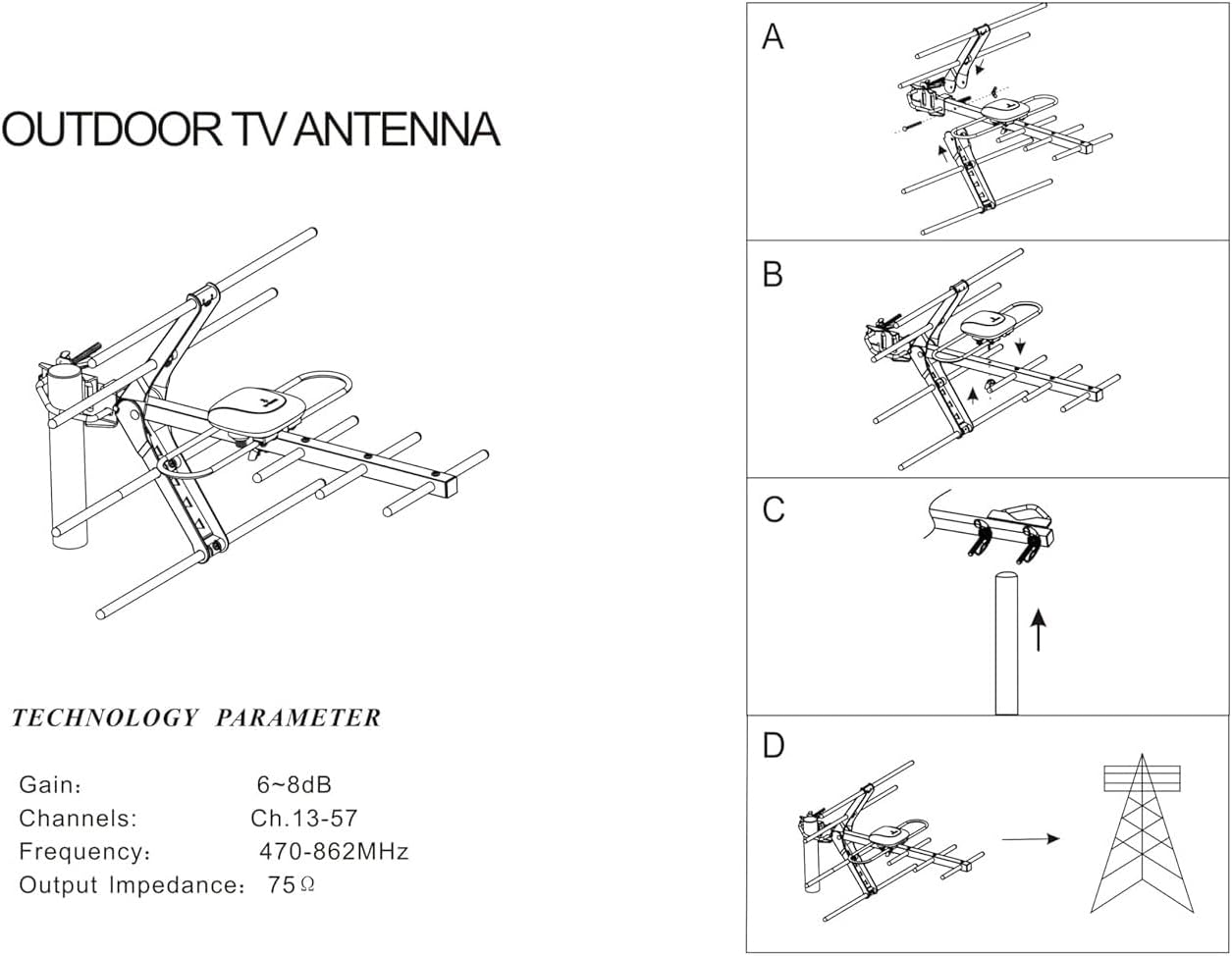
Now read the spec panel that ATEK prints on its own packaging, because this is where the trap is. Gain: 6 to 8dB. Frequency: 470 to 862MHz. Output impedance: 75 ohms. Six to eight decibels is a perfectly respectable figure for a compact aerial, but it is a long way from what a big wideband Yagi on a long boom will give you. And it sits in almost exactly the same range as the loss your roof imposes.
Sit with that for a second. In a loft, this aerial can spend most of its gain advantage just getting back to where a bare aerial on the roof would have started. Whether there is anything left over for you depends entirely on how much signal is arriving at your house in the first place.
40% Signal, Then 91%. He Did Not Move the Aerial, He Turned It.
Steve Dutton left a five-star review that is worth more than the rest of the listing put together. He assembled the aerial in his loft, retuned the bedroom TV and got 40% signal strength. Then he rotated the whole aerial through 90 degrees, so the rods pointed up and down instead of lying flat. His TV's own signal meter went to 91%.
In his words: "you might need to mount it with the elements at 90 degrees to what is pictured in instructions ( elements vertical not horizontal) I put it together in the loft and re-tuned bedroom tv. 40% signal strength. Aerial through 90 degrees 91% signal strength shown in tv settings."
Same loft. Same aerial. Same afternoon. He more than doubled his signal reading with a spanner.
This is polarisation, and it is the single most useful thing to understand before you buy any loft aerial. UK transmitters broadcast either horizontally polarised or vertically polarised, and the rods on your aerial have to lie the same way as the ones on the mast. Get it 90 degrees out and you throw away a huge slice of your signal for nothing. Most of the big main transmitters are horizontal, with the rods flat and parallel to the ground. A great many of the smaller relay transmitters are vertical, with the rods pointing at the sky.
Here is the catch that catches people out: ATEK's assembly diagram shows the aerial with horizontal elements. If your transmitter is vertically polarised, the picture in the box is wrong for your house, and if you follow it faithfully you will get a weak signal and quite reasonably conclude the aerial is rubbish.
Checking costs nothing. Walk outside and look at the aerials on your neighbours' roofs. If every rod on the street is flat, mount yours flat. If they are all standing up on end, mount yours on end. Your neighbours have already done the survey for you.
How many of the sixteen one-star reviewers never tried this? There is no way to know, and it would be unfair to pretend otherwise. What is fair to say is that it is free, it takes five minutes, and it is the first thing to rule out before you write the thing off.
The Transmitter You Are Aiming At Decides This, Not the Aerial
George T gave it three stars and, without meaning to, explained the entire one-star pile in a single sentence: "Connected & tried to search for channels. None found. Aerial quite small, no use in my area relying on relay mast."
Relay transmitters are the small local masts that fill in the gaps the main transmitters cannot reach. They run at lower power and they carry fewer multiplexes, which means fewer channels even when everything works. If your postcode is served by a relay, you are already starting from a thinner signal, and then you are asking a 6 to 8dB aerial to work from under a roof. There simply is not enough headroom in the design for that.
Line that up against the people who are happy and the pattern is hard to miss. One five-star reviewer, R, fitted it in the attic and wrote that "provided you point it at a nearby tower, works perfectly and gives a clear image even during a storm". Note the condition attached to that sentence. Derek Blake, also in the loft: "Fitted in loft 150+ channels found." Mr Chris Dawson got a "quality strong signal from external and internal (Loft)".
Neil Gee is the most interesting of the lot, because he never got as far as the loft. As a temporary measure he strapped the aerial to an old photographic studio lighting stand in his dining room, pointing out of the window towards a transmitter he reckons "possibly could be 20 to 30 miles away". It is still there. He gets "a good quality picture all the channels on Freeview including the HD ones", and he is careful to note that the feed runs through an old hard drive recorder "which may boost the signal". An aerial working indoors, behind glass, 20-odd miles out, is a decent advert for the design.
Now the counter-example, because it is the one that stops this being a puff piece. Kevin Hayward ordered one for a holiday home. He pointed it at the nearest transmitter and got BBC1 and BBC2, and nothing else. He tried aiming at a different transmitter: no improvement. He swapped the cable. He added a signal booster. Then he bought "a different aerial costing the same amount from Screwfix" and, in his words, "Within 30 minutes I had > 200 channels."
That is not a location problem. Same house, same money, different aerial, completely different outcome. It is the clearest evidence in the whole review set that when this aerial runs out of gain, a bigger one does not.
So take this as read: a compact loft Yagi cannot rescue every weak-signal house in Britain, and anyone who tells you a twenty-quid kit fixes a fringe-reception postcode is selling you something. It has a working range. Inside it, it is superb value. Outside it, it will waste your afternoon.
The 4G Filter Is Doing Real Work in a British Loft
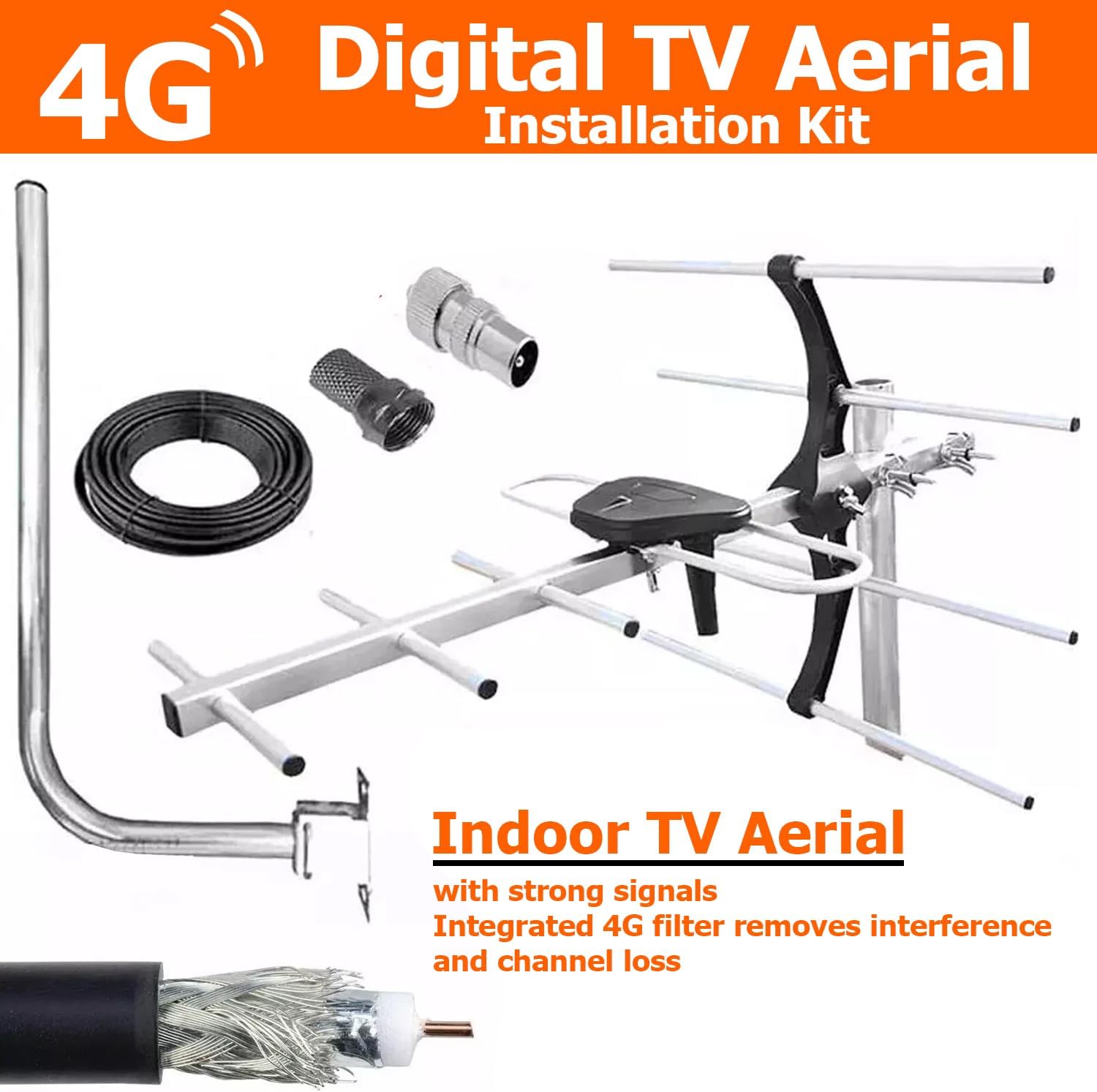
Every cheap aerial listing on Amazon shouts about a 4G filter, so it is easy to file it under marketing garnish. In the UK, it is not.
Look at the spec panel one more time: the aerial is rated from 470 all the way to 862MHz. The top of that range runs straight up into spectrum that used to carry television and now belongs to the mobile networks. A wideband aerial that reaches that high will happily gather up a nearby mobile mast along with your Freeview multiplexes, and your tuner does not thank you for it. You get the classic British complaint: picture is fine, picture is fine, picture pixelates and freezes for four seconds, usually during a penalty shootout.
The filter board that ATEK builds into the head, which you can see in the product close-ups and which the listing calls out as a "Built in Filter Circuit Board", exists to cut exactly that. It is there to reject the signal the aerial's own bandwidth would otherwise let straight in. ATEK is not consistent about how much it does: one bullet on the listing says the filter "reduces interference", while the listing graphic claims it "removes interference and channel loss" outright. Believe the first one. A filter like this cuts the problem down, it does not abolish it.
If you live within sight of a mobile mast, and most of us now do, this is one of the very few features on a budget aerial that is load-bearing rather than decorative. An unfiltered bargain-bin Yagi with the same gain figure is a worse buy, and it will be worse in a way that is maddening to diagnose because it will work perfectly for hours at a time.
The Coax Has Moulded Plugs on Both Ends, and in a Loft That Is a Nuisance
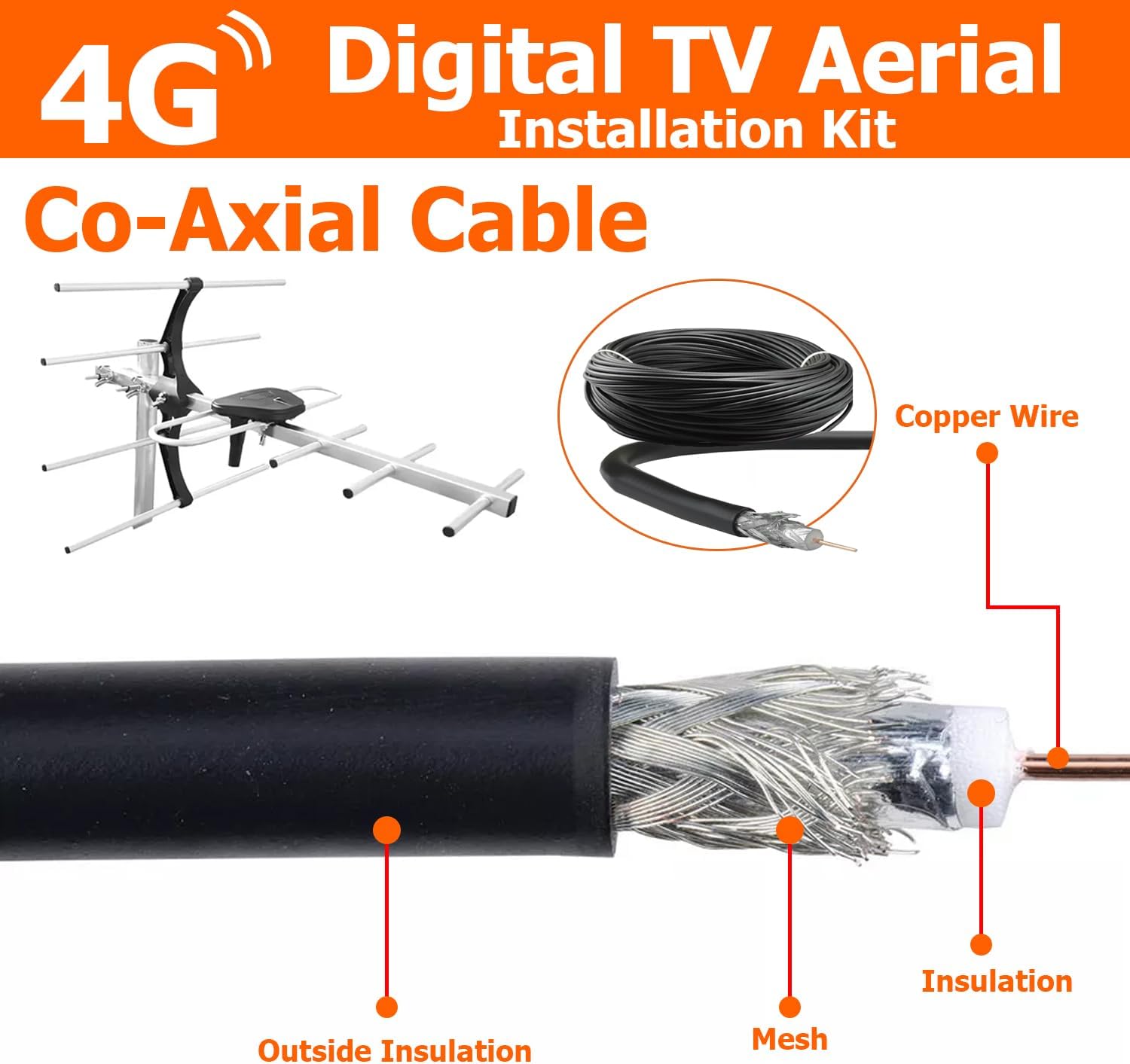
This is the one practical gripe that will actually change your afternoon, and it comes up twice in the recent reviews from people who clearly know what they are doing.
Katherine McCloskey, one star, spotted it before even installing: "the delivered kit was NOT as described. The listing called out \"F connector x 1\" and diagrams implied a bare end on the coax. Instead the coax was terminated on each end with molded on connectors.. This precludes trimming to appropriate length, and having to drill a hole large enough for the molded connector to pass instead of one the diameter of the cable."
Ian Anderson, three stars, hit the identical wall on a loft job: "The Ariel cable comes with adapters already attached not the same as pictured, as I didn't need the cable was expecting the connections to fit to an already installed cable into my daughters loft."
Why does it bite harder in a loft than on a roof? Because a loft install is all about the cable route. You are feeding coax down through a joist, along a wall void, or through an existing hole that a previous aerial used. A cable with a fat moulded plug on the end cannot be trimmed to length, cannot have your own connector fitted, and needs a bigger hole to pass through. If you were planning to splice into the downlead that is already there, buy a coupler before you go up.
The upside is that you can ignore the supplied cable entirely if you already have a working downlead. Jolly34 did exactly that after a storm took the chimney aerial down: "i bought this using the same wiring from old aerial just hooked it up in loft and great signal, very surprised how many channels it picked". Five stars, and about the least effort anyone in this review set expended.
Two more things from the box. The mast is short. Ed the dog measured the supplied pole and reported it was "around 18\" at most", adding pointedly "NOT 90° or 3 ft". In a loft that is mostly fine, because you are clamping it to a rafter or a purlin rather than needing reach. And the instructions are, by common consent, poor: 10 of the 94 recent reviewers bring them up, hardly any of them warmly. Tom, three stars: "Very basic instructions. I had to look at review pictures to work out how to put it together." Even Neil Gee, who loves the thing, found them "a little confusing at first". Budget half an hour on the living room floor before you carry it up the ladder.
The Indoor Panel, This Kit, the Screwfix Yagi, or a Man With a Ladder
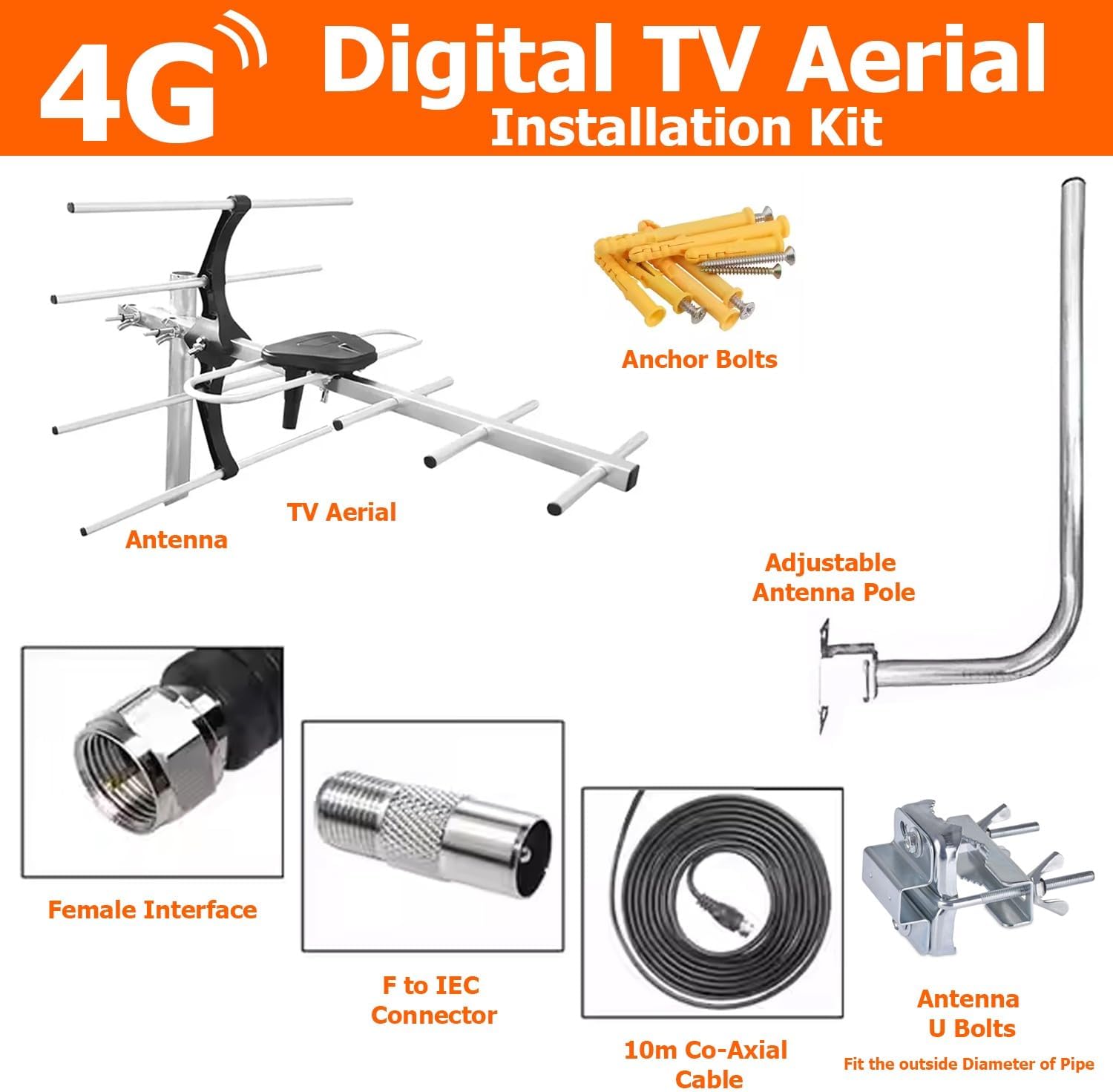
There are only four real answers to a weak Freeview signal, and it is worth knowing which one you are actually choosing between.
The amplified indoor aerial. The flat panel stuck to the window, the little One For All perched on top of the telly. This kit beats it, and the reviewers who moved up say so without prompting. One three-star buyer, who was rude about the build quality and had a connector snap during assembly, still conceded that the "Picture is really good much better than indoor ariel with booster". That is the whole point of a Yagi: it is directional and it has a reflector, so it looks at the transmitter and largely ignores everything else. An omnidirectional panel behind the sofa cannot do that at any price. If you are currently on an indoor aerial and losing channels when it rains, this is a straight upgrade.
This kit. Modest gain, real directionality, a 4G filter that is doing something useful, everything in the box, and it goes up in an afternoon. Its lane is a loft, within decent range of a main transmitter, ideally with an existing downlead you can hook into.
The bigger DIY-shed Yagi. An SLx or Labgear wideband from Screwfix or Toolstation, with a lot more elements on a much longer boom. More elements means more gain and a narrower beam, and it costs roughly the same money. Kevin Hayward's one-star review is the entire argument for this tier: this aerial gave him two channels, the Screwfix one gave him over two hundred in half an hour. If you are on a relay, or a long way from the mast, or your roof is lined with foil, go straight here. The trade-off is physical: a big aerial is a big aerial, and lofts are full of purlins, water tanks and awkward angles.
The professional roof install. Two reviewers in this set priced it up and flinched. Jolly34 was quoted "at£350" for a new aerial on the roof. Neil Gee reckoned "I could have been charge £500+ to have one installed". That is the real competition for a budget loft kit, and it explains why this listing sells. What the money buys you is height, a clean line of sight, and somebody else on the ladder. What it costs you is a few hundred pounds you could have kept.
Where that leaves the ranking: if you are within range of a main transmitter and your loft has no foil in it, this kit is the value pick and the roof job is overkill. If you are on a relay or out in the sticks, skip this tier entirely and buy the bigger Yagi, because the cheap one will only teach you an expensive lesson about a wasted Saturday.
The Flimsy Plastic Splits Into Two Complaints, and a Loft Only Cures One
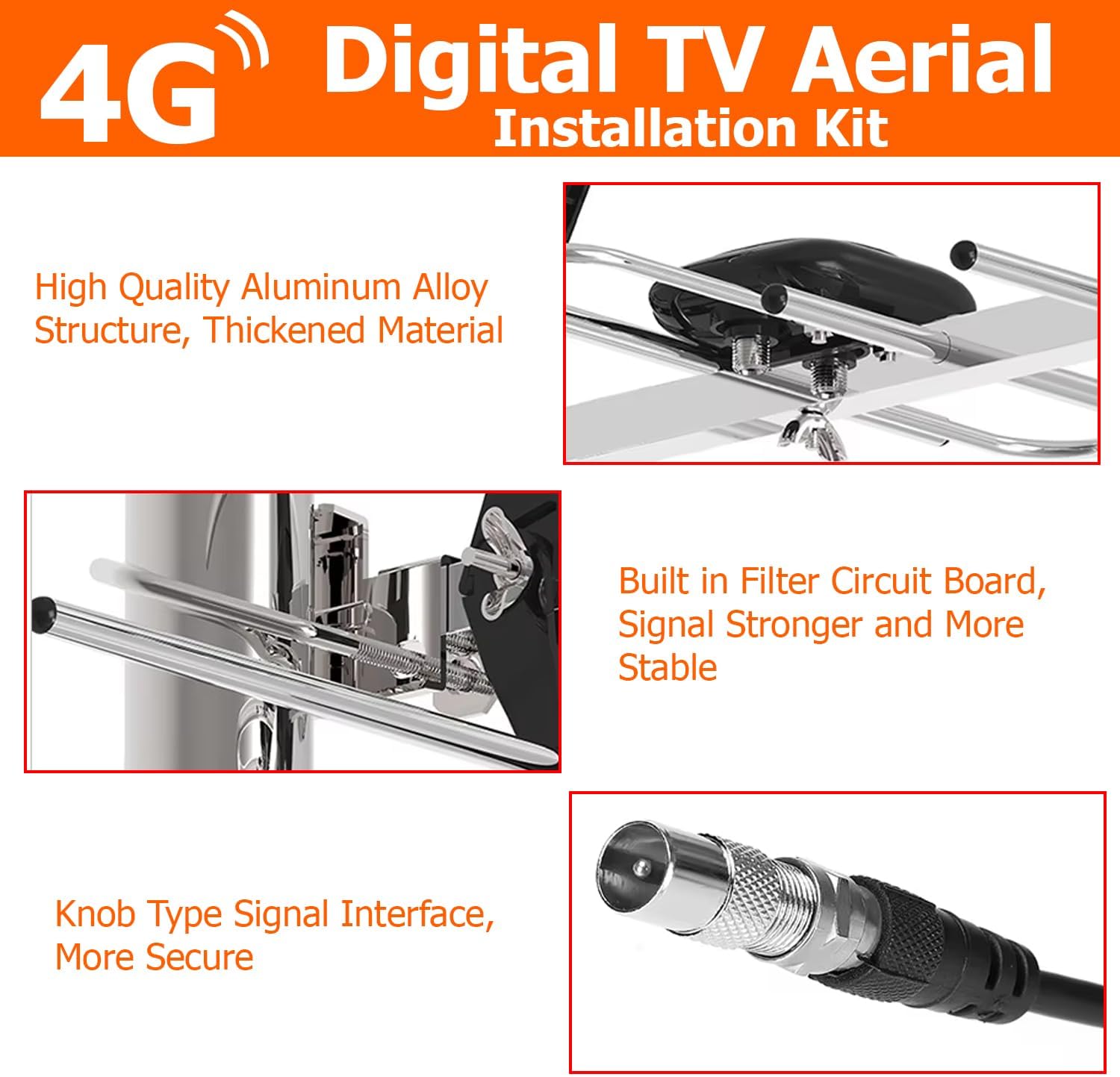
The build complaints are real, they are frequent, and there is no point pretending otherwise. A dozen of the 94 recent reviewers gave it three stars or fewer and specifically raised build quality, transit damage or missing parts.
Alexander R., one star: "Cheap construction plastic materials used would not last very long in an outside environment". Christopher D., one star: "Poor build quality very flimsy and did not give a good signal". David Steen, three stars: "Cross pieces were loose and could not be tightened." Mr. Nich, two stars, had one arrive "slightly damaged" and returned it for a refund that "was processed very quickly". One three-star buyer had the connector break during assembly and simply fitted a different one.
Now sort them into two piles. The first pile is about the weather. Would not last in an outside environment. Leaves the connection open to the rain. These are complaints about UV, rain, wind loading and frost, from people who bolted a budget aerial to the outside of a building and watched British weather do its work.
Put the same aerial in a loft and that entire pile disappears. No rain on the unshielded plug that Ed the dog rightly complained about. No wind loading on a light boom. No frost cycling cheap plastic until it goes brittle. It is a whole category of failure that a loft install structurally cannot have, and you opt out of it for nothing.
That, more than anything in the marketing copy, is the argument for buying this particular aerial for a loft rather than a roof. You take the gain and the directionality of an outdoor Yagi, and you decline the one job it is demonstrably worst at.
The second pile is the one a loft does not touch, and it is the bigger of the two: the delivery lottery. Bent elements, loose clamps, missing fixings, a connector that snaps the first time it is tightened. Four walls and a roof will not save you from any of that. So do this: open the box on the kitchen table and assemble the whole thing on the floor before you go anywhere near the loft hatch. Check every rod, every clamp and both connectors. Returns on this listing appear to be quick and painless. A second trip up and down the loft ladder is neither.
Five Things to Do Before You Decide It Is Faulty
Almost every angry review on this listing describes a person who did one of these five things wrong. Work through them in order and you will know within an afternoon whether you have a bad aerial or a bad plan.
1. Find your transmitter before you find your ladder. Put your postcode into the Freeview coverage checker. It will tell you which mast you should be aiming at and how far away it is. Most importantly, it tells you whether you are served by a main transmitter or a relay. If it says relay and you are already short of signal, stop here and buy a bigger aerial. You have saved yourself a Saturday.
2. Get the polarisation right. Look at the aerials on your street. Rods lying flat means mount yours flat. Rods standing on end means mount yours on end, whatever the diagram in the box shows. This is the move that took Steve Dutton from 40% to 91%, and it is free.
3. Mount it high, and get away from the foil. As high in the roof space as you can reach, ideally at the gable end facing the transmitter. If there is foil-backed felt or foil-backed insulation between the aerial and the mast, you are trying to watch television through a metal sheet. Look for a gap, try the gable wall, or accept that a loft aerial is not going to work in your house.
4. Beg, borrow or buy a signal meter. John M fitted his in the loft "using signal meter(bought separately but made job easy)" and gave it five stars. Aiming an aerial by shuffling it a degree at a time while somebody downstairs shouts up the loft hatch is a miserable way to spend a Sunday. A cheap meter, or even a phone on a video call pointed at the TV's signal-strength screen, turns aiming into a two-minute job.
5. Retune fully, then think about an amplifier. A proper full retune, not a quick scan. And if you are splitting the feed to several rooms, budget for a distribution amplifier. Steve Davis runs "4 TVs with a booster 95 % signal" from this aerial in his attic. Just understand what an amplifier does: it boosts the noise along with the signal, so it solves a splitting problem, not a weak-signal problem. If the aerial is picking up nothing, a booster will give you a stronger nothing.
Who Gets 150 Channels, and Who Gets a Refund
The listing sits at 4.2 stars from 278 ratings. The 94 most recent reviews average 3.89, with 58 five-stars and 21 reviews at one or two stars. That is a properly divided product, and now you know why the division exists.
Get this aerial if you are within reasonable range of a main transmitter, your loft has no foil-backed felt in the way, and you are prepared to spend an afternoon aiming it properly rather than bolting it to the nearest rafter and hoping. Get it if you are currently limping along on an indoor aerial. Get it if a storm took your chimney aerial down and the downlead is still hanging there doing nothing, because that is jolly34's story and it is the single easiest win on this listing. On those terms it is the cheapest fix available to you, and the evidence backs it up: of the 13 recent reviewers who describe a loft or attic install, 12 gave it five stars, and the thirteenth was cross about the cable connectors rather than the reception.
Walk away if your postcode is served by a relay mast, if you are a long way out, or if your roof is lined with foil. Buy the bigger Yagi from a trade counter instead. It costs about the same, and Kevin Hayward's two channels versus two hundred is all the argument you need. Walk away too if this is going on the roof, because the weather complaints in the one-star reviews are consistent and the supplied plug shield does not seal the connection against rain. This is an outdoor aerial that is at its best indoors, which sounds like a contradiction until you have read the reviews.
The score reflects both halves of that. It is a good aerial in a narrow lane, sold with instructions that barely qualify as instructions, and assembled to a standard that means you should check every part before you climb the ladder. In the right loft it will find you more channels than you knew existed for less than the cost of a takeaway. In the wrong one, no amount of retuning will save it, and the sooner you work out which loft you have, the better.
ATEK 4G Outdoor TV Aerial Kit with 10m RG6 Cable for Freeview HD
An outdoor-grade UHF Yagi with a built-in 4G filter, sold for the roof but at its best in the loft. Aerial, adjustable pole, U-bolts, anchor bolts and 10 metres of coax, all in the box.