Best Smart Bulbs With Bayonet Fitting UK: Does Anything Beat Tapo's B22 Bulb Yet?
Screw fittings get all the good smart bulbs. Bayonet gets whatever is left over, which is why nearly every UK search for a B22 colour bulb lands on the same Tapo. For most homes it is the right answer. For homes whose router hides its 2.4GHz band, it is a fortnight of swearing, and nothing on the box warns you.
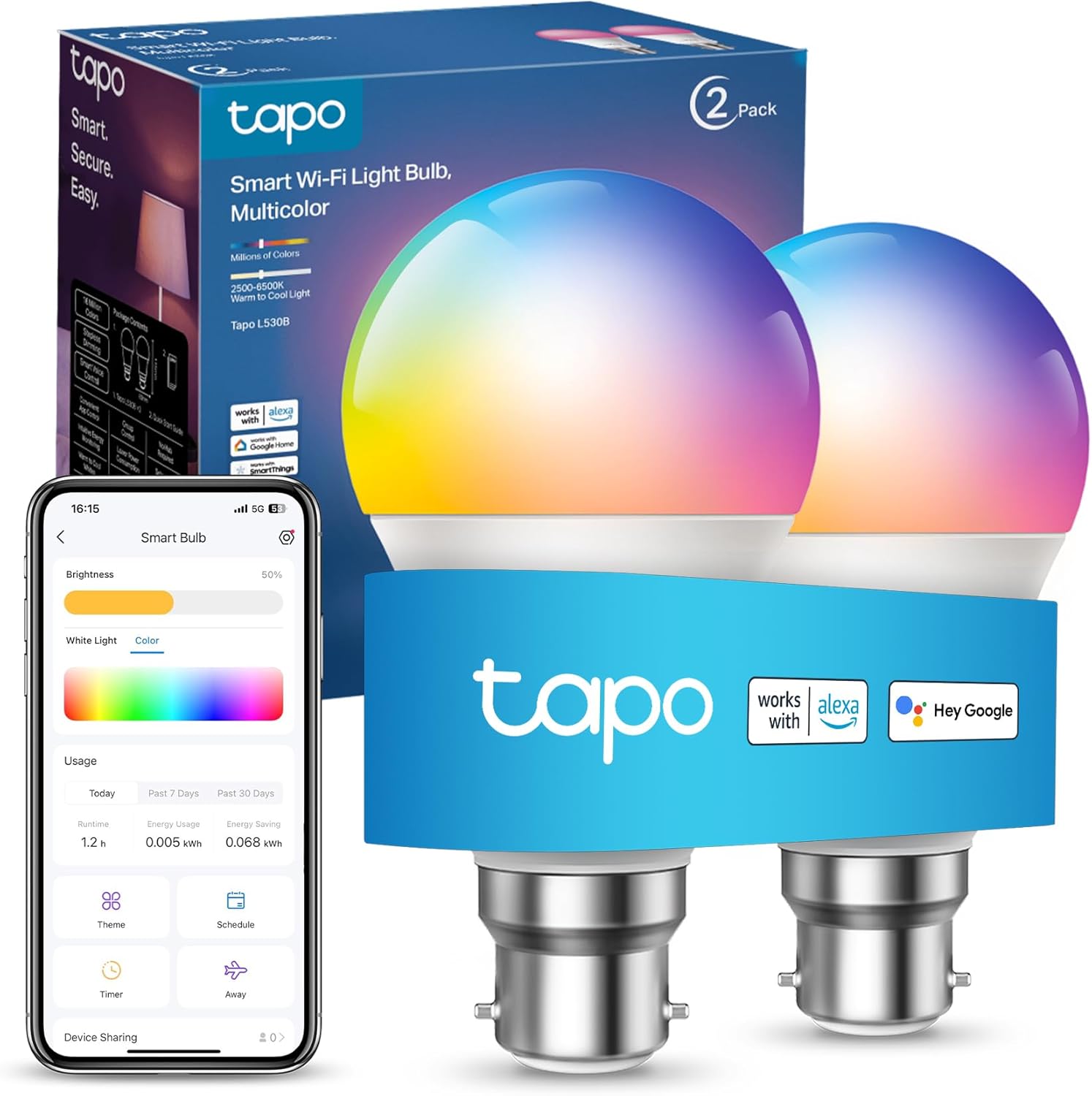
- The Best Smart Bulbs With Bayonet Fitting UK Homes Can Buy Are Mostly One Bulb
- Your Router, Not the Bulb, Decides How This Goes
- Away Mode Is the Best Reason to Buy These. It Is Also the First Thing to Break.
- The 60W Badge Is Doing Some Heavy Lifting
- What the Five-Star Half Actually Does With Them
- The Schedule Crowd Is Where This Bulb Really Wins
- Tapo vs Hue vs the Own-Brand Bulb
- What the Box Doesn't Tell You: Dead Bulbs, App Ads and an F on the Energy Label
- Buy It If Your Router Cooperates. Skip It If It Doesn't.
Go looking for a smart bulb in Britain and you hit a wall almost immediately. You find the bulb you want, scroll down to pick your fitting, and the only option is a screw cap. Meanwhile your hall pendant, your standard lamp and the ceiling rose in the bedroom all take a bayonet, the two little pins you push and twist, and the shortlist gets a lot shorter than the roundups made it look.
That is the whole reason this search exists. B22 is the British fitting, and the big colour smart bulb ranges lead with screw caps because they were drawn up for markets that use them. The bayonet version is the afterthought variant, when there is one at all.
So almost everyone lands on the same product: TP-Link's Tapo L530B, sold as a two pack, sitting on 4.4 stars from 16,292 ratings. It is the default B22 colour bulb on Amazon UK by a distance. Which means the real question is not which bayonet smart bulb to buy. It is whether the one everybody buys is any good, and the answer is hiding in the reviews Amazon shows you last.
The Best Smart Bulbs With Bayonet Fitting UK Homes Can Buy Are Mostly One Bulb
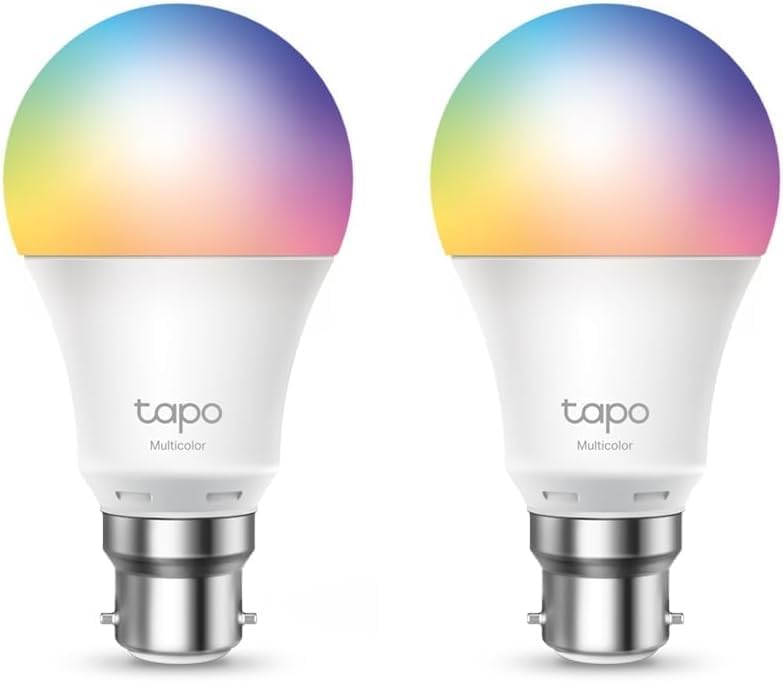
Strip the category down to B22 colour bulbs and the field collapses. Tapo's L530B is the one with the reviews, the stock and the two-pack price, and everything else is either a screw fitting, a white-only bulb, or something with two hundred ratings and a brand name you have never heard of. The B in L530B is the bayonet cap, and that single letter is why you are here.
The good news first, because it is the part nobody bothers to check: the fitting itself is a non-event. Across the 100 most recent reviews, not one person complains about the cap. Nobody says it was loose, nobody says it fouled the shade, nobody says it would not seat. Mark Govier makes the point that actually matters if you are putting these in lamps: "Being the same size as a typical bulb they fit well and give good all round light in table and standard lamps." Plenty of smart bulbs are fatter or longer than the bulb they replace and end up poking out of the shade. This one does not.
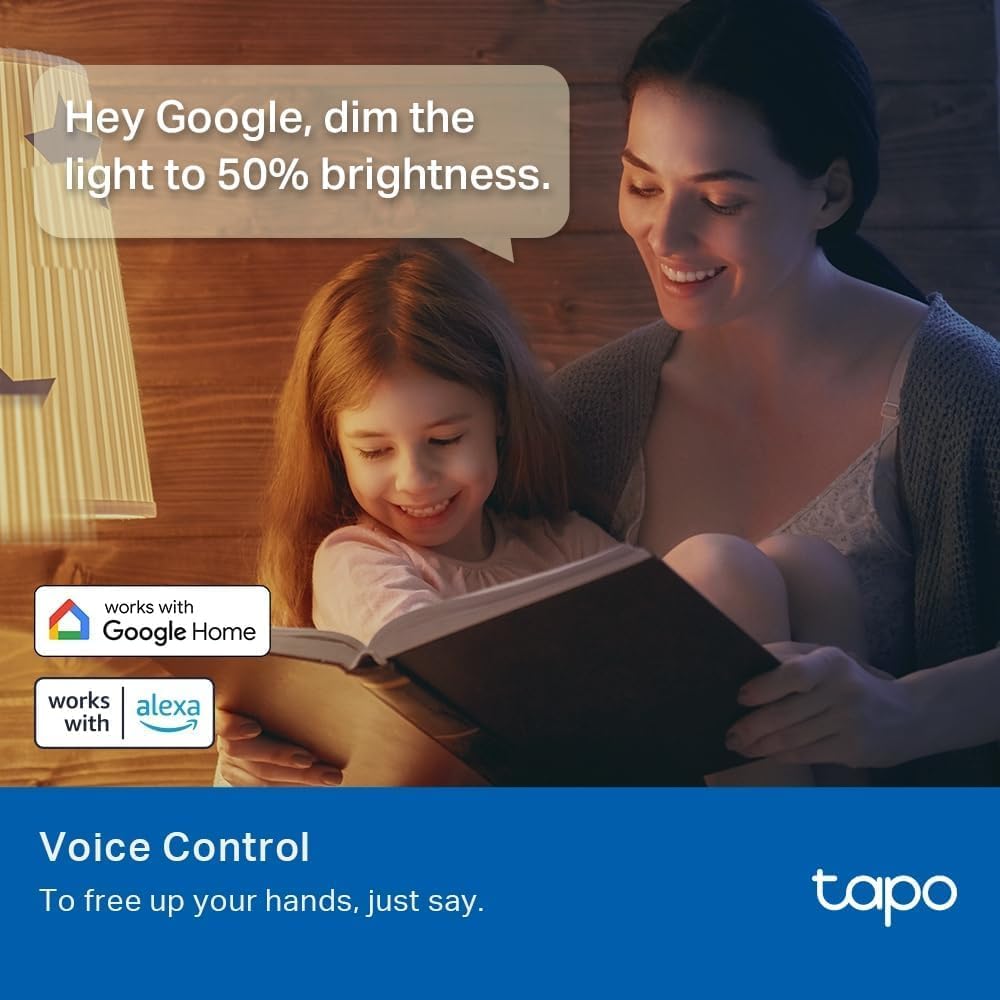
On paper the spec is exactly what you want at this end of the market. TP-Link lists it at 8.7W against a 60W equivalent, dimmable across a 1 to 100 percent range, 16 million colours, and a white range from warm 2500K up to cool 6500K. Schedules, timers, sunrise and sunset modes, an away mode, and voice control through Alexa or Google Assistant. No hub, no bridge, no extra box on the router shelf: the bulb joins your wifi and that is the setup.
Which is the whole pitch, and also the whole problem. Everything hard about this bulb happens after you have twisted it in.
Your Router, Not the Bulb, Decides How This Goes
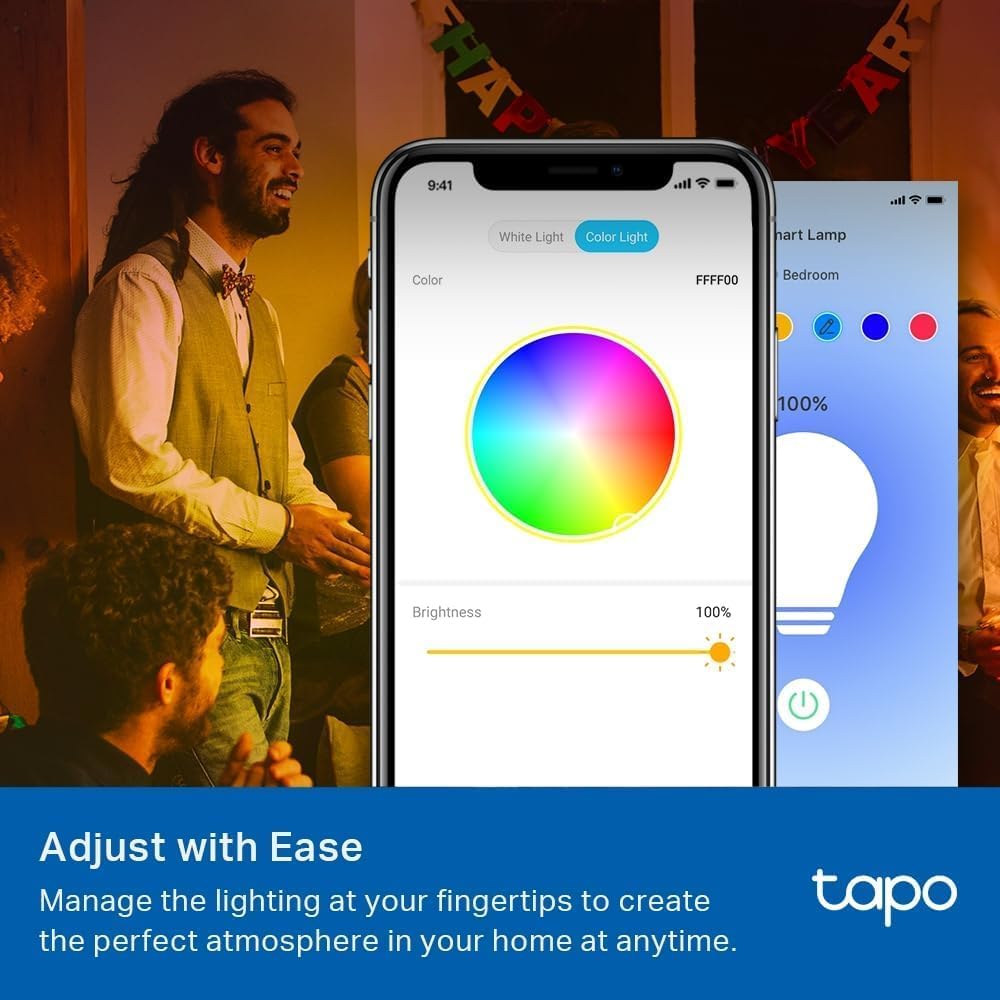
Read the reviews in order and setup splits the room down the middle. One camp cannot believe how easy it was. Chloe, who had swerved smart bulbs for years, writes: "Always avoided smart bulbs as I thought you needed some whole hub set up etc, but literally plug these in and youre ready to go, and set up was so easy." Alys Hardy, ash, Sam and icePhalanx all say versions of the same thing.
The other camp is losing entire evenings. J. Simmons: "Need a degree to work out how to connect this, every time with this brand." E. T-Newns was "an hour into following the instructions to the letter" and getting nowhere. Fokz. reports that "even my two techno savvy sons failed to connect them to an app etc". Robert spent an afternoon on it, gave up, and put his old Philips Hue bulb back in.
Same bulb, same app, wildly different afternoons. The variable is your router, and four of the 100 most recent reviewers put their finger on exactly why. The L530B pairs over 2.4GHz only. Nesan spells it out: "It will only work with a 2.4GHz WiFi. Most routers now work on 2.4GHz and 5GHz." Luke H. hit the wall the hard way, staring at an "infinite loading screen saying "pairing bulb"" before working out that the bulbs "do not work on 5GHz wifi and I do not have access to change this making this just another regular bulb lol".
That is the trap. Most UK ISP routers broadcast 2.4GHz and 5GHz under a single network name and quietly decide which band your phone sits on. If your phone is on 5GHz when you start pairing, the app hangs, and nothing in the box tells you that is what went wrong.
The most useful review on the entire listing is from Dan9111, who titled his five-star write-up "5 start product with 3 star instructions." His fix, verbatim: "You MUST have a 2.4ghz WiFi network for these to work. Your phone MUST be on that network for the initial setup". He set up a second, 2.4GHz-only network on his router, told his phone to forget the 5GHz one, turned mobile data off so the app could not wander onto it mid-pairing, and typed the wifi password out by hand rather than pasting it. It took him "over a dozen failed attempts" to work that out. His verdict is the fairest sentence anyone has written about this bulb: "Probably not suitable for anyone who's not willing/able to go into their router settings and split their network."
It is not a guaranteed cure, mind. Riaan Jutte already had 5GHz disabled on his router and still could not pair a Tapo bulb to his Pixel 9. But if logging into your router and splitting the bands sounds like a job you would rather lie down than start, price that in before you click buy. If it is a five-minute task you have done before, you will be fine.
Away Mode Is the Best Reason to Buy These. It Is Also the First Thing to Break.
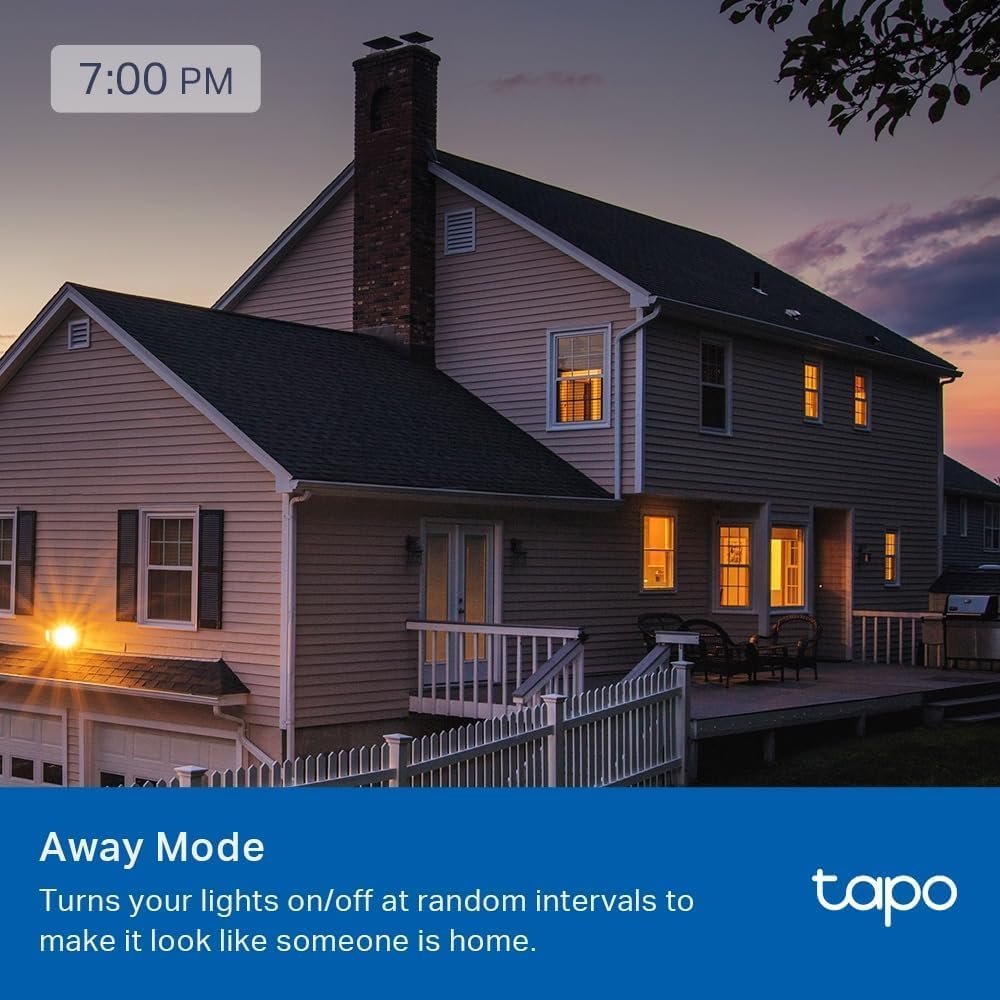
Away mode is the feature that sells smart bulbs to people who do not care about smart bulbs. TP-Link's own line is that it "Turns your lights on/off at random intervals to make it look like someone is home", and for a hallway lamp while you are in Spain for a fortnight, that is a proper reason to spend the money.
Now read M&M's one-star review. She bought them for precisely that: "I use them a lot while I'm away on holiday mode so lights turn on and off so people think someone in house." And then: "Fine while I'm on the same WiFi . Soon as I leave they go off line !" The feature failed at the one moment it existed to cover.
She is not alone. More than a dozen of the 100 most recent reviews describe the bulbs dropping offline or needing to be set up all over again. Sean T. says they "constantly lose signal and have to be reset". Matt hancocks: "The bulbs continue to just go offline. Despite several resets." Red captures the mood best, describing bulbs that lose connection to Alexa every couple of months, where getting them back "seems to depend on the position of the sun in the sky and the wind speed as to whether or not they will reconnect on the first attempt or whether it will take three days and a lot of swearing before they work again".
The detail that should worry you most comes from a three-star reviewer posting as Anonymous, and it is the one thing no product page will ever tell you: "if it goes offline while the lights were off you cannot put it back on until you reset the bulb, and you have to reset any existing automation or routines." Read that again. A bulb that drops off the network while switched off is not a dumb bulb, it is a dead one, until you physically reset it and rebuild your schedules. That is worse than the bulb it replaced.
Even some of the happy reviewers see it. Frenz gave five stars and still logged the fault: when his router reboots, every Tapo device drops at once, and "the only way I've found to get them connected is to restart the router." darryl munday, two stars, is furious about the official workaround: "the advice you get is to move the bulb closer to the router. So I'm suppose to yank the fixing from the ceiling to get it closer to the router."
It is not universal, and the pattern is not random. Dela, five stars, says the opposite: with other wifi bulbs she has had to re-pair every unit whenever the internet drops, "which is a nightmare.... Not these". The bulbs that misbehave tend to be the ones furthest from the router. A lamp in the same room as the hub is a very different proposition from a ceiling rose two floors up, and if that is where yours is going, take the complaints seriously.
The 60W Badge Is Doing Some Heavy Lifting
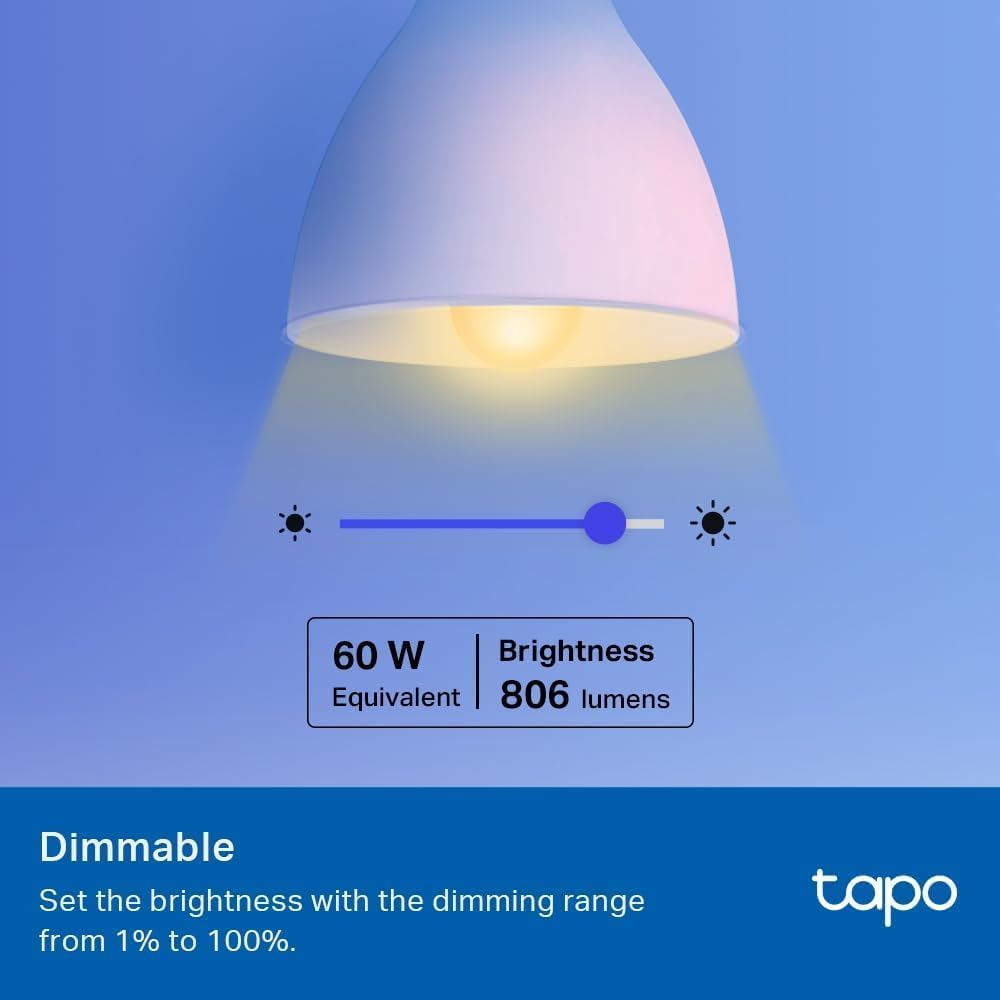
TP-Link's own graphic puts the L530B at 806 lumens, badged as a 60W equivalent, dimmable from 1 to 100 percent. That is a standard 60W replacement and no more. It is not a 100W bulb, and if you are swapping out something bright, you will feel the difference.
Alan, who liked the bulb enough to give it four stars, put it plainly: "this is equal to what most understand as a 60w bulb, I would like a 100w version of this ideally".
The bigger catch is one the listing never mentions, and it is physics rather than a defect: the colour output is dimmer than the white output. Considerably. Zombie, two stars, is blunt: "Colour options all very dim even on max brightness. Only white is actually useable but doesn't feel like 60w." Nesan docked it to three stars for that reason alone, noting it is "quite dim--even when the colour temperature is set to 6500K". An Amazon Customer who otherwise liked it enough for five stars still wrote: "Brightness is less should be improved."
So park the 16 million colours for a second, because the white light is where this bulb actually performs. Mary's review is the most technical on the listing and the most useful: the light "at 2500k is ideal for bedrooms and goes way dimmer than my old smart whites bought a decade ago", and she recommends it "especially if you prioritise white light from warm to cold daylight". pattrina agrees, preferring "the warm amber colour... rather than the bright white of some light bulbs". Julie-Anne Shaw's summary runs to two words on the subject: "Bright light."
Here is the buying steer nobody in the roundups will give you. In a table lamp, a standard lamp or a bedside fitting, 806 lumens is plenty and the colour is a bonus you will actually use. As the only bulb lighting a kitchen or a big living room, it will feel weak, and in colour mode it will feel weaker still. Buy it for lamps and mood, not to light a room from a single ceiling rose.
What the Five-Star Half Actually Does With Them
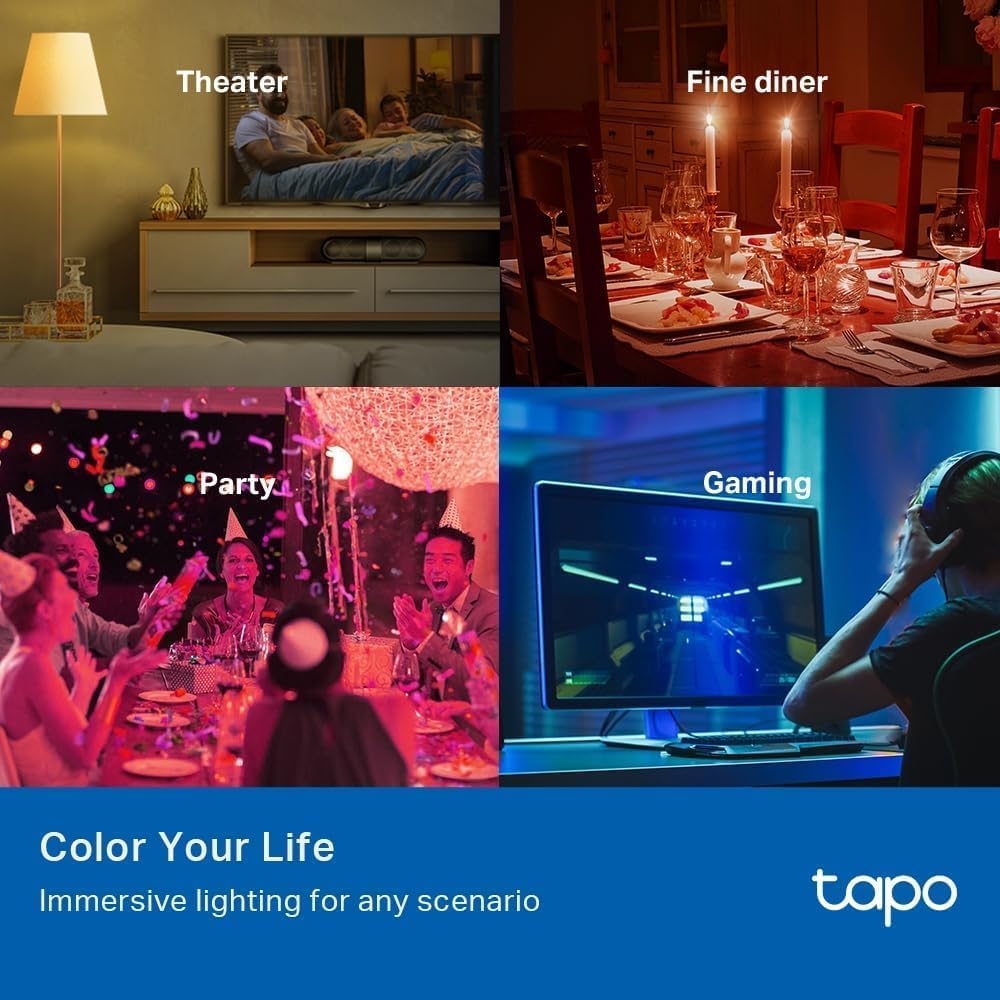
Fifty-four of the 100 most recent reviews are five stars, and they are not writing about lumens. They are writing about a house that behaves differently.
Chloe does not normally review anything and made an exception: "Never leave reviews but I had to for these. Absolutely changed my home. I love to have a movie night and these absolutely changed the experience." Tez_i_b bought them and watched the family take over: "The grand children love the colour change." Alan, in among his grumbling about brightness, points out that "you can even have a disco with it" and that with young kids you can "become a magician and hero in front of them". David G keeps it simple: "Good for mood lighting with the dimmable option."
Jordan strawford, four stars, has settled into the app properly and gets a "wide range of colours and pattern options" plus a run-time readout, all controlled through Alexa. Mary found controls her decade-old smart bulbs never had, including random on-off scheduling, saved colour and temperature presets, and an energy meter tracking consumption over days and weeks.
The thing binding all of it together is the bit Chloe flagged: no hub. Philips Hue's colour bulbs traditionally want a bridge plugged into your router before anything happens, and that box is the reason a lot of people never start. Tapo skips it. You unbox two bulbs, twist them in, open an app, and you are running. For a first smart bulb, that removed obstacle is worth more than any feature on the list, and it is the single biggest reason Tapo owns the budget end of this category in the UK.
The Schedule Crowd Is Where This Bulb Really Wins
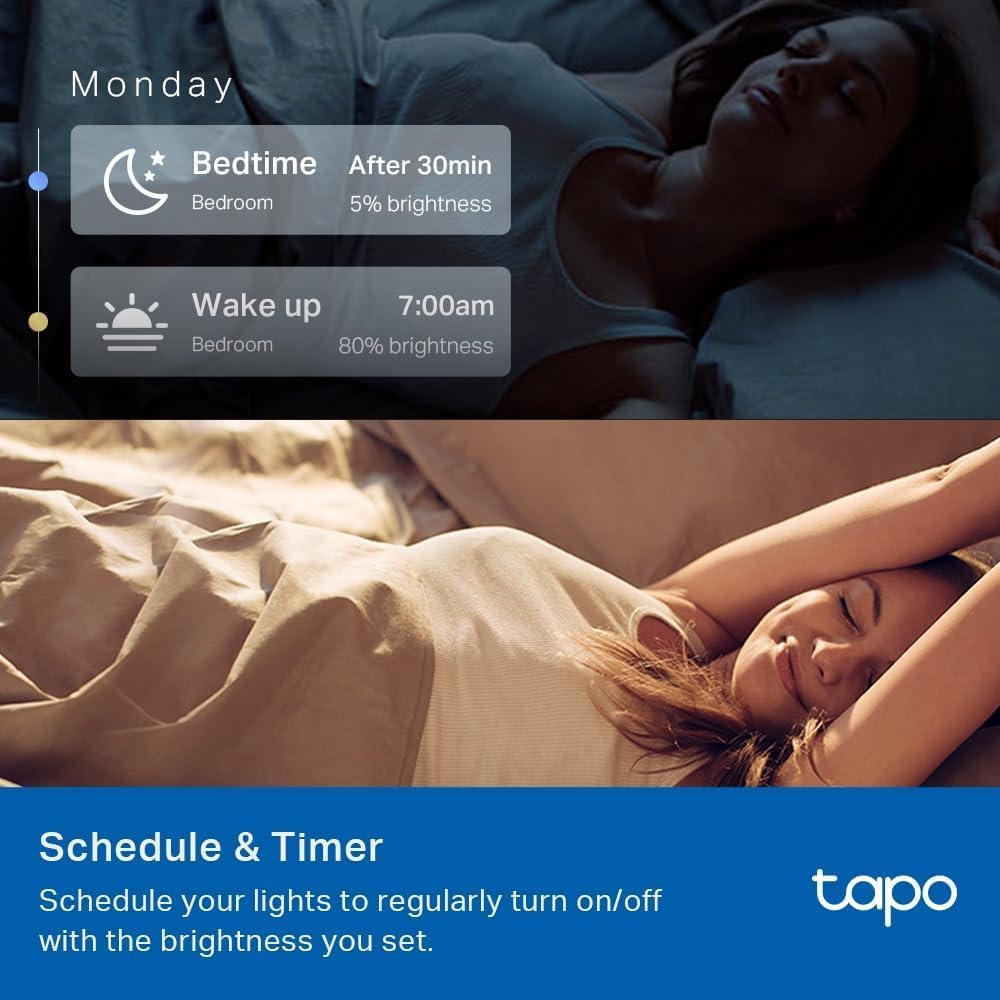
If you want the clearest signal in 16,292 ratings, it is this: the people who love these bulbs mostly are not playing with colours. They are automating a house.
callum, four stars, points straight at the group that gets the most out of them: "A good budget friendly bulb which is useful for shift workers as you can set it up to be on at certain times". Niffler works unsociable hours and has "scheduled the lights to switch on with my alarm and when I leave and return home so I'm not stumbling in the dark". Hank wanted one thing and got it: "Just what we needed. Auto-on at sunset and off at sunrise." icePhalanx solved a very familiar domestic problem, calling them "Perfect to switching all lights off when kids leave every light on in the house at night".
The review that makes the strongest case, though, is wendy king's, and it has nothing to do with gadgets. She found voice control invaluable when she was on crutches: "when injured on crutches turning them on and off via voice Alexa again was such a help." Then she put them in her mother's house: "my elderly mother has them to gives me peace of mind if she gets up in the night as she can have the light on immediately."
That is the buyer this bulb is built for. If you want scheduling, hands-free control for someone with limited mobility, or lights that come on before you get home in a British January, the L530B does the job for a fraction of what the premium ecosystems charge, and the colour wheel is a bonus you can ignore entirely. Just make sure the wifi actually reaches the fitting first, because every one of these use cases dies the moment the bulb goes offline.
Tapo vs Hue vs the Own-Brand Bulb
Three realistic options face a UK buyer with bayonet fittings, and the review data actually separates them.
Philips Hue, the premium answer. Robert's two-star review is the cleanest comparison anyone has written: "Spent an afternoon trying to get bulb paired with network. Every time it failed SO GAVE UP! Put my Philips hue back which works perfectly." Hue hangs its bulbs off a bridge instead of asking each one to hold its own wifi connection, and that architecture is what the extra money buys. If your bulbs are going into awkward fittings far from the router, or you simply refuse to spend an evening on this, that premium is buying you something real.
The cheaper own-brand bulb. Andrew Jackson returned his Tapos and reckons "There are much better options available, even from Amazon Basics." One buyer's view rather than a lab test, but it is the alternative people reach for, and on the evidence of the recent reviews the Tapo is not so far ahead that it cannot be caught.
Tapo, the default. Far cheaper than Hue, no hub to buy, and by a huge margin the most reviewed B22 colour bulb on Amazon UK. When it works, reviewers are delighted. When it does not, they are furious. There is not much middle ground, which is why Red titled a review "Either Fab or Horrendous nowhere in the middle."
Before you decide, check which smart home you actually live in, because this is where some of the one-star reviews come from. Alexa and Google Assistant are both on the box and both work. SmartThings is badged too. Apple Home is not, has never been claimed, and 3M bought one anyway: "No connectivity with Apple Home possible. Avoid." Blunt but fair, and the listing never promised otherwise. Matter is absent as well, which prompted a wistful aside from Rus: "Why is there no matter support though? :(". Steve Perrin found it will not join Tuya either. Home Assistant is not an official claim, but Omid runs one alongside a Zigbee motion sensor and says "it is compatible with HA", and Mark Govier confirms they "work well through the Tapo app, Google Home and Home Assistant".
So: Alexa or Google household on a budget, Tapo. Apple Home household, walk away now and save yourself the return. Bulbs going somewhere your wifi struggles, pay up for Hue.
What the Box Doesn't Tell You: Dead Bulbs, App Ads and an F on the Energy Label
Two bulbs come in the box. A recurring complaint is that only one of them works.
Nora, two stars: "One bulb is working perfectly, the other one started flashing during the night, turned on in bright white colour then pink, then flashing again and now it is no longer turning on." A reviewer posting as Tomato grower from sussex had one of the two never pair with the app at all, called support without success, and watched the return window pass with nothing resolved. Longevity is a theme too. John lost a bulb outright after a year, and it "doesn't come back on". pakemon, still generous with four stars, notes "one light died while re setting up after ~1y". GamerGirl got six weeks. ben got about a day.
Then there is a firmware quirk worth knowing if one of these is going in a bedroom. The listing promises the bulb "automatically returns to its previous power-off state". A four-star reviewer posting as Testing 1,2,3 found the opposite after a power cut: "during power outages, the bulb automatically turns on (even when its off on the app) when power comes back." A 3am blackout that ends with your bedroom light blazing is a memorable way to discover this.
The app has picked up its own baggage. Amy, a long-time Tapo user, dropped to one star over it: "After years of using them, they added ads to the app. If you don't want to pay for hosting, don't use cloud. This is a gross bit of corporate greed." Kevin drobecz has a more practical gripe: "App is rubbish, you try grouping bulbs together!"
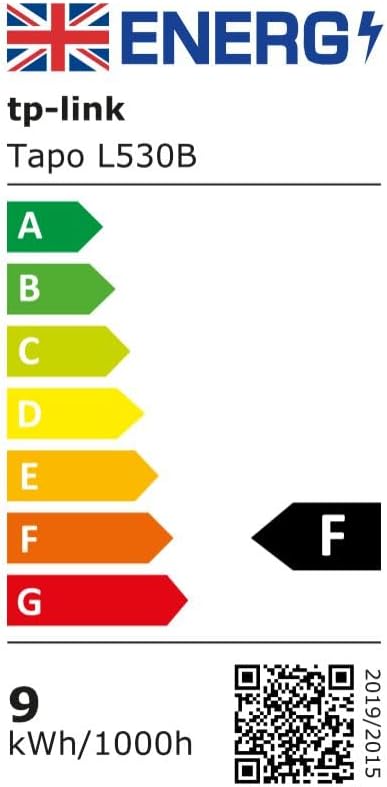
And while we are reading labels, look at the one TP-Link puts on the listing itself. "Energy Saving" is a headline bullet, but the official UK energy label rates the L530B F, at 9 kWh per 1000 hours. Against the 60W incandescent it replaces, it obviously costs far less to run. Against other LED bulbs on the shelf, that F is near the bottom of the scale. Buy this bulb for what it does, not to shave money off your electricity bill.
One last caveat on the reviews themselves. Amazon pools ratings across this listing's variants, so not everything on the page comes from someone who bought the two-pack bayonet colour version. One four-star reviewer, posting as stone guy, describes a "Functonal bulb that doesnt do colours", which is plainly not this bulb. Weigh any pack-size or colour-specific claim with that in mind, including some of the glowing ones.
Buy It If Your Router Cooperates. Skip It If It Doesn't.
The lifetime badge says 4.4 stars from 16,292 ratings. The 100 most recent reviews average 3.69, and 31 of them are one or two stars. Both numbers are true, and the gap between them is the most useful thing in this article. The bulb that gets recommended in every UK smart home thread is having a harder time lately than its headline rating suggests, and almost all of that trouble is wifi, not light.
Buy it if you run Alexa or Google, you can see a 2.4GHz network in your router settings, the bulbs are going into lamps or fittings with solid wifi, and what you actually want is schedules, away mode, dimming and voice control without buying a hub. On that brief it is excellent, and nothing else with a bayonet cap comes close for the money.
Skip it if you live in Apple Home, you will not go anywhere near your router settings, you need one bright bulb to light a whole room, or the fitting sits in the far corner of the house where your wifi already drops out. In those cases pay more for Hue, or leave a dumb bulb in the lamp and put a smart plug on the cable instead. You will get the schedules and the voice control, and none of the pairing grief.
It remains the answer to the bayonet question, mostly because the competition never showed up. Go in knowing which half of the reviews you are likely to end up in.
Tapo L530B B22 Smart Bulb (2-Pack)
The default bayonet colour smart bulb on Amazon UK. 806 lumens, dimmable from 1 to 100 percent, schedules, away mode and Alexa or Google voice control, with no hub to buy.