Smart Light Switch With No Neutral Wire UK: Can You Trust the Tiny SONOFF ZBMINIL2?
Take the faceplate off a UK light switch and there is usually no neutral wire behind it, which quietly rules out most of the smart switches on Amazon. This matchbox-sized SONOFF is the workaround the smart home crowd keeps landing on. Whether it works for you comes down to your back box and your hub, not the switch.
- Your Actual Shortlist: SONOFF ZBMINIL2 vs Shelly 1L vs Tapo S210
- If You Own a Philips Hue Bridge, This Is Not Your Module
- Zigbee Is Not WiFi, and That Trips Up a Lot of Buyers
- Measure Your Back Box Before You Add to Basket
- The Dropouts Are Real, and a Zigbee Router Usually Fixes Them
- Living With It: The Click, the Lag and the Dimming You Do Not Get
- One Listing, Several Pack Sizes: How to Read the Bad Reviews
- Smart Light Switch With No Neutral Wire UK: Who Should Buy This SONOFF
Unscrew a UK light switch and there is a good chance you are staring at two wires and a bare earth. No blue neutral. That one missing wire rules out most of the smart switches on Amazon, because nearly all of them need a neutral to keep their radio powered while the light is off.
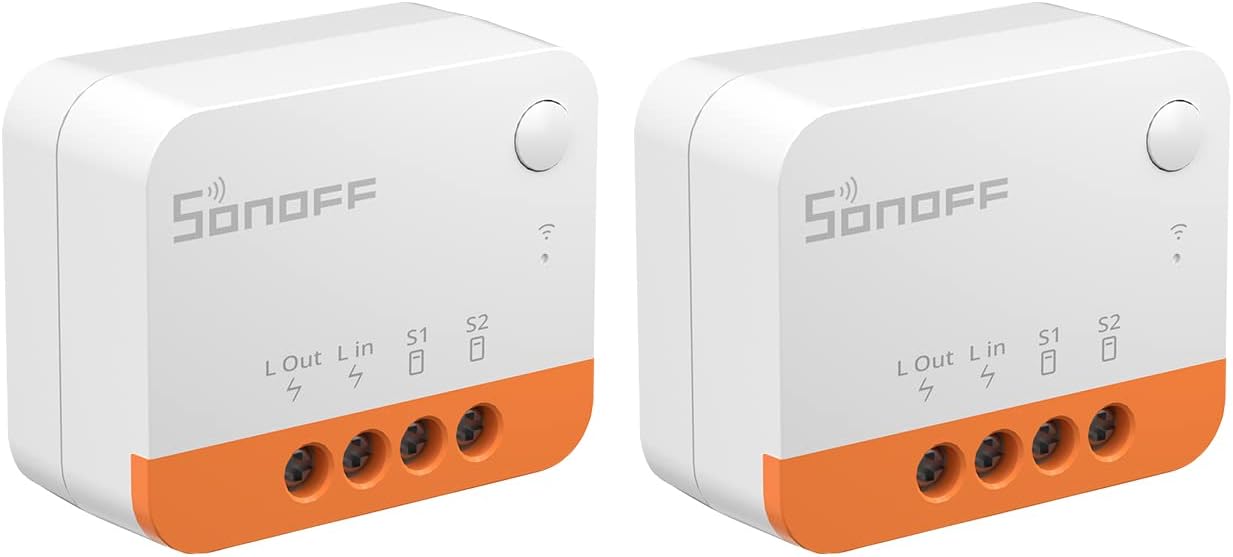
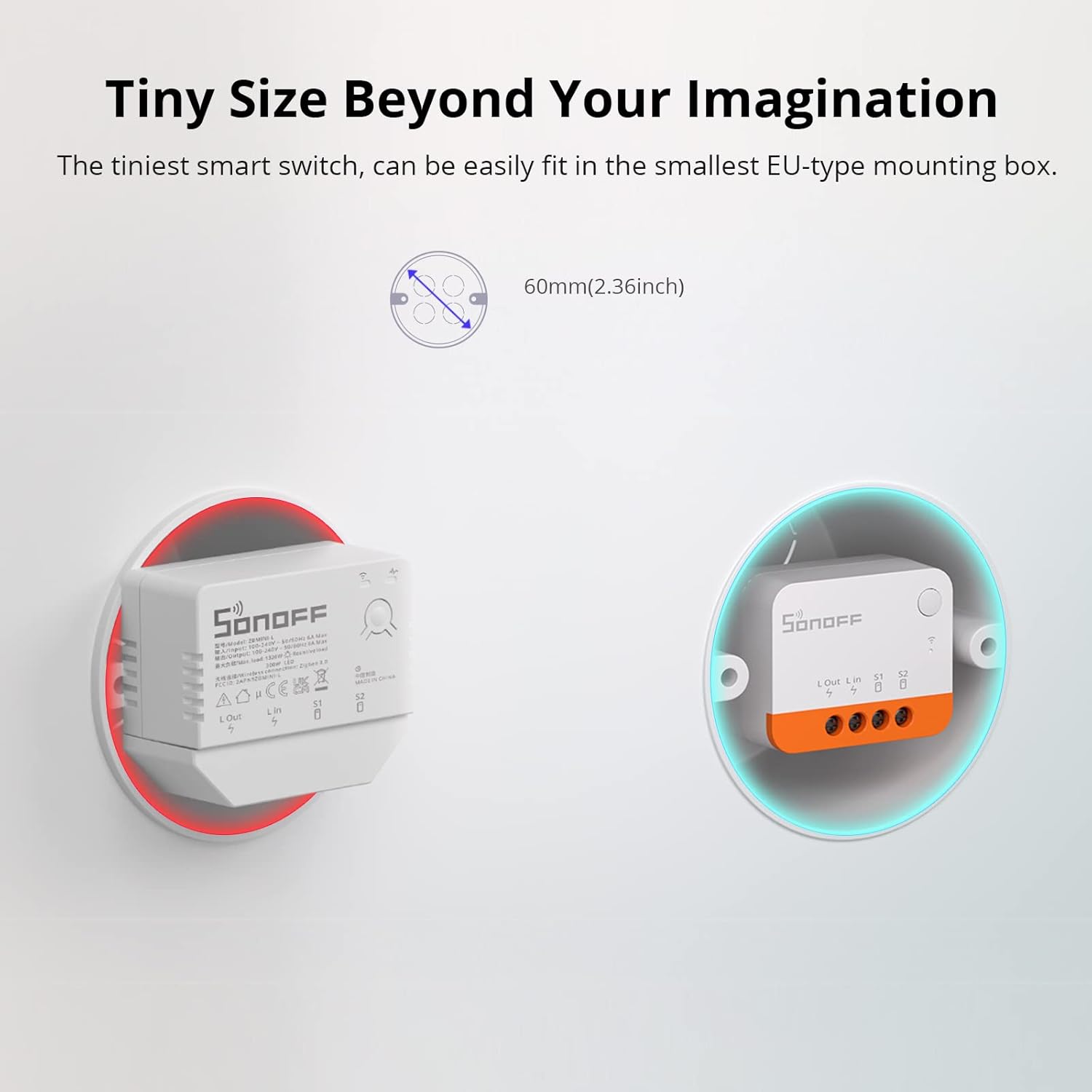
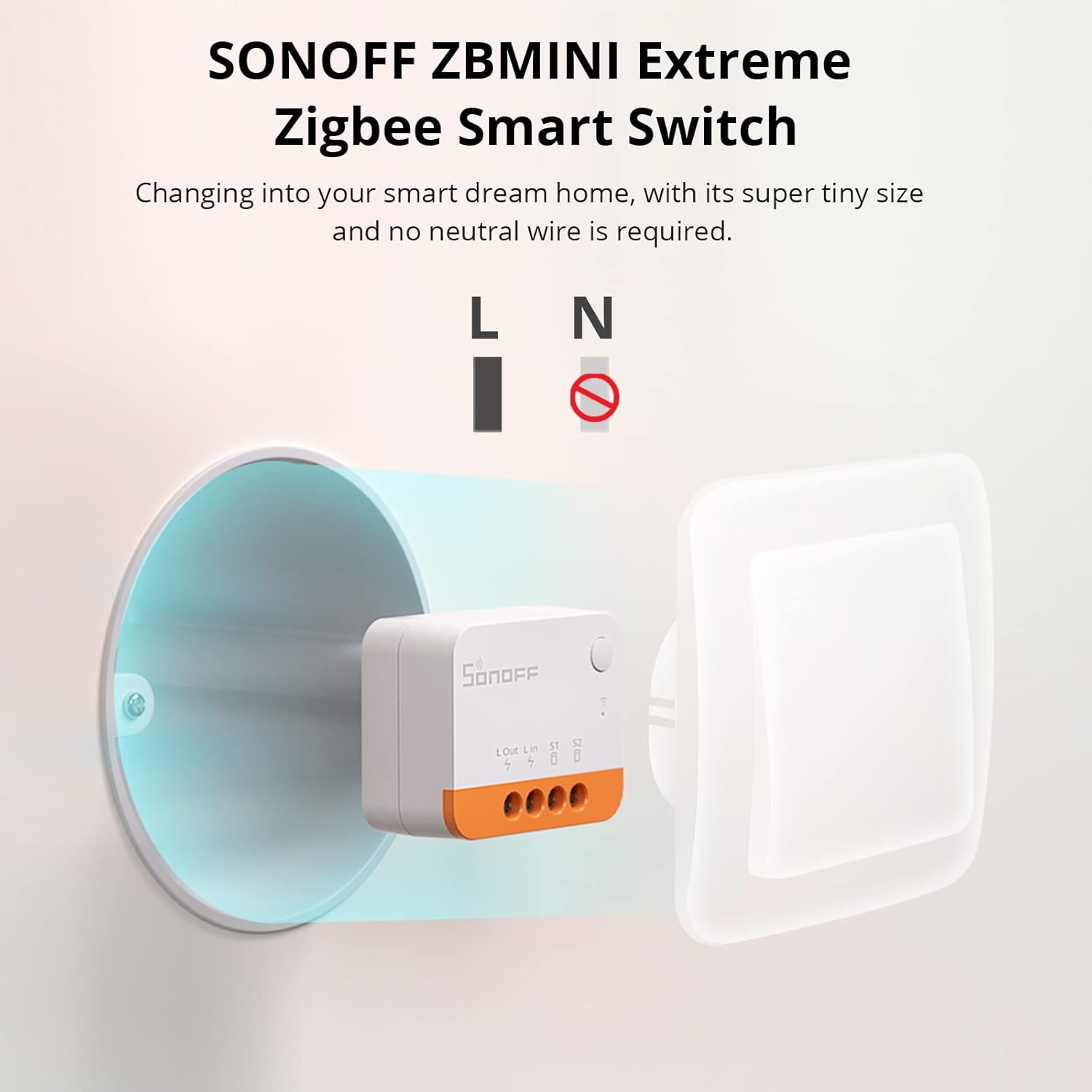
Which is why the same short list keeps coming up whenever someone posts a photo of their back box in a UK smart home group: the Shelly 1L, the Tapo S210, and this thing, the SONOFF ZBMINIL2. It is a Zigbee relay module measuring 39.5 x 32 x 18.4mm, it hides behind your existing faceplate, and it needs no neutral and no battery. It sits on 4.2 stars from 1,891 ratings.
Dig into the last 100 reviews and the average drops to 3.77, but the interesting part is the shape of that score rather than the number. Fifty one of those hundred are five stars. Seventeen are one star. The middle of the scale is thin by comparison. Read the two piles side by side and the split has almost nothing to do with the switch itself. It is about your hub, your back box, and whether anyone told you Zigbee is not WiFi.
Your Actual Shortlist: SONOFF ZBMINIL2 vs Shelly 1L vs Tapo S210
With no neutral at the switch, your realistic options narrow to about three, and each one solves the problem differently.
The Shelly 1L is the WiFi option and the ZBMINIL2's closest rival, because it is the other module that works without a neutral. Reviewers have moved in both directions between the two. Dominic, in a rental with no option to rewire, ran a Shelly 1L first and watched it decline, trying everything including "even flashing Tasmoto", before switching across: "I've had it installed for several months now and it has never failed or disconnected like the Shelly." The SONOFF is "even smaller than the Shelly 1L but a bit deeper", according to that same review. Christopher bunce went the opposite way and left a one star on the way out: "Had to replace it with a Shelly 1L as it kept dropping out."
The split is real, and it comes down to protocol. The Shelly is WiFi, so it needs no hub but does need your router to behave. The SONOFF is Zigbee, so it needs a hub but keeps working when the internet goes down.
The Tapo S210 is the battery-powered no-neutral route, and one of the most detailed reviews here compares them head to head. Gallowglass, migrating away from Tapo, notes: "Unlike my existing Tapo S210/S220 no-neutral-required switches, this does not require a battery to drive its electronics." The trade is depth. The same reviewer needed a pattress spacer for the SONOFF "where a Tapo S210 did not".
Smart bulbs are the escape route people forget, and one five-star reviewer makes the case for the switch better than we could: "There's a usecase for smart bulbs and there's a usecase for smart control at the light switch itself." Smart bulbs die the moment someone flips the wall switch off. This module keeps the wall switch live and adds the smarts behind it.
Our call: if you already run a Zigbee hub, with the one big exception covered in the next section, the SONOFF wins this group on size, price and local control. If you have no hub and no intention of buying one, the Shelly 1L is the more sensible purchase.
If You Own a Philips Hue Bridge, This Is Not Your Module
This is the single most expensive mistake in the review pile, and it is worth putting near the top.
Five reviewers in the last hundred mention Philips Hue. All five say the same thing: the ZBMINIL2 will not pair with the Hue Bridge. Pete Taylor bought it specifically because it was Zigbee, assumed the Hue bridge would take it like any other third-party accessory, and left a two star: "I'm getting no use out of it". Tony could not get it to appear as a light in the Hue system at all. Another reviewer put it plainly: "Not compatible with Philips Hue, even though the description doesn’t mention it."
Being a Zigbee 3.0 device is not enough on its own. Hue's bridge is selective about what it admits, and this module does not make the list. Even Bill Brook's glowing five star opens with the warning before explaining the workaround: buy an Echo with a built-in Zigbee hub and pair it there instead.
If Hue is the backbone of your smart home, close this tab. Nothing else in the review data changes that answer.
Zigbee Is Not WiFi, and That Trips Up a Lot of Buyers
Seventeen of the last hundred reviews are one star. Work through them and a pattern shows up fast: a large share are people who never got the thing to pair at all, and several of those were hunting for it on their WiFi network.
M. Parker's one star is the archetype: "Made sure I had a 2.4Ghz WiFi connection and even created a network just to pair this." Another one-star reviewer complains it "shows up when searching wifi switches when its definitely not one". Gavin Cliffe, five stars, wrote his whole review to answer them: "you need a ZigBee co-ordinator or Bridge (or a Recent generation of Amazon Echo)".
The most useful review in this group belongs to Grissle Mc Grissle, who spent hours failing to pair it, assumed the Echo in the house had a Zigbee hub built in, then discovered it did not. After buying a standalone hub: "with the addition of a stand alone hub I got it working as it should. I have therefore edited and changed the rating to 4 stars." A one star became a four star, and nothing about the product changed.
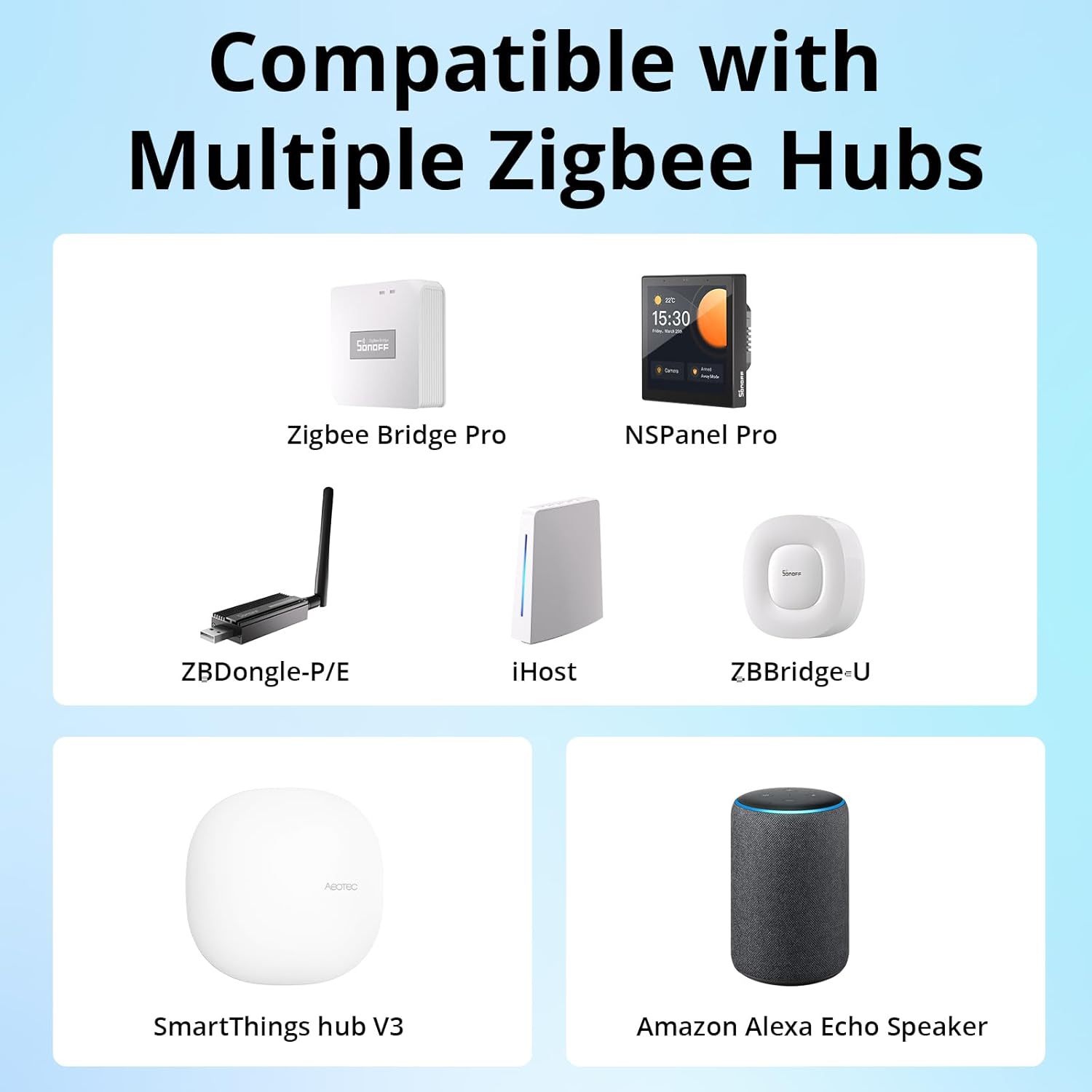
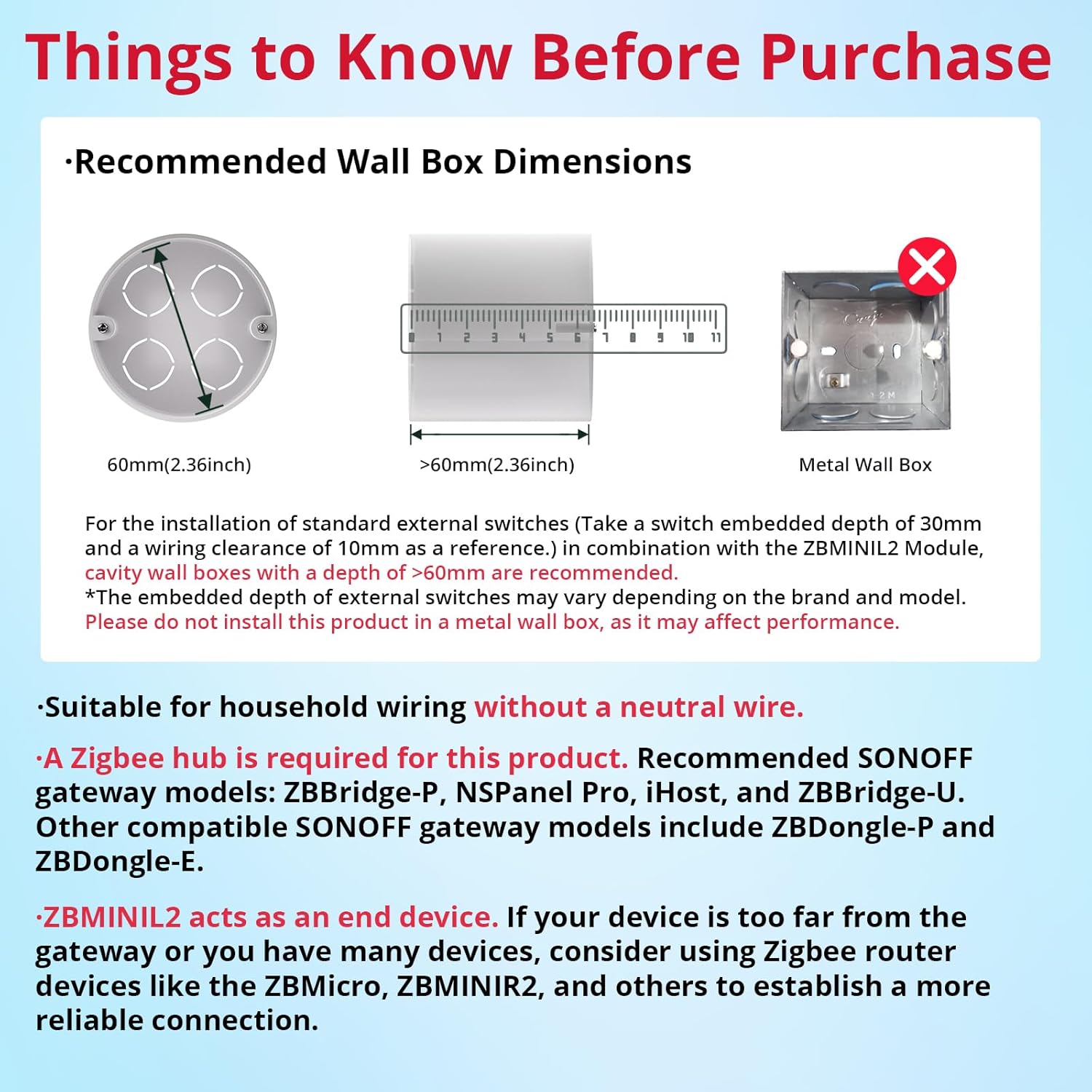
So, what actually drives it? The listing says Alexa, SmartThings, Google Home and SONOFF's own ZBBridge-P, with a Zigbee hub required. The reviews go further. Twenty seven of the last hundred reviewers mention Home Assistant, Zigbee2MQTT, ZHA or Hubitat, which makes Home Assistant far and away the most common home for this module. Others get there in ten minutes with an Echo: "less than 10 minutes when using an Echo 4 as a Zigbee hub", says Cleethorpes Chris, who also confirms you do not need the eWeLink app at all.
One pairing tip that comes up repeatedly: bring the hub to the switch. Christopher Gerhard warns that "pairing them requires the hub to be within a metre of the switches", and GARMAN only got a successful pair after "bringing the SmartThings hub close to the switch".
The upside of the Zigbee route is local control. As one five-star owner puts it, there is "No need for Sonoff or other app that connects you to the internet. Keeps the connection local for better security." Cleethorpes Chris was replacing "a BroadLink light switch which needed both a hub and an internet connection. This needs neither."
Measure Your Back Box Before You Add to Basket
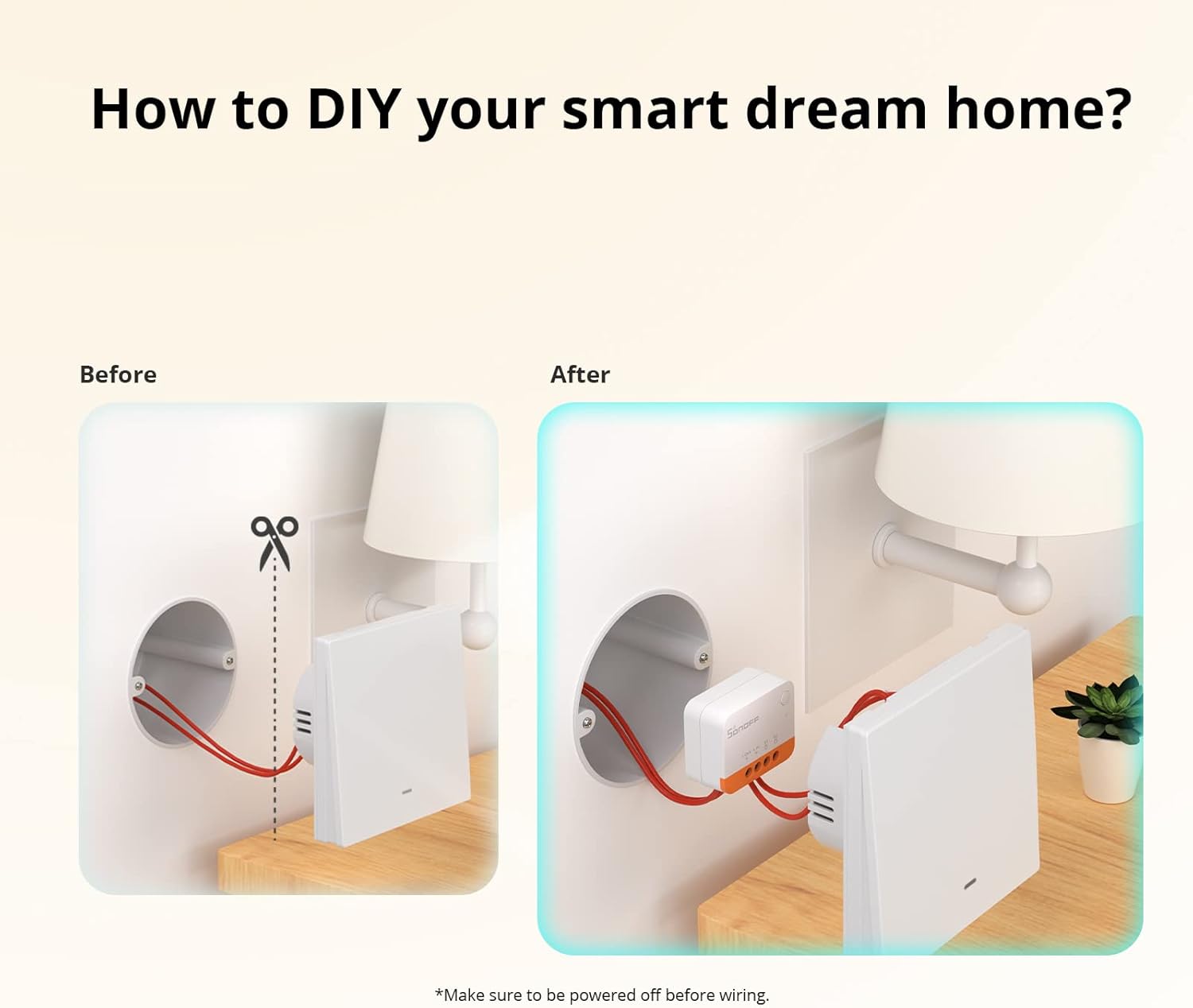
SONOFF quotes the module at 39.5 x 32 x 18.4mm and says it fits the smallest EU, 86 type and 120 type mounting boxes. UK back boxes are messier than that, and this is where the four-star reviews turn into three stars.
The 25mm box is the battleground, and reviewers flatly disagree. Mr. Adam Owen says it "wouldn’t fit in a 25mm back box as there isn’t enough depth left for the switch faceplate". Mr Chops found "there just wasn't room to install this in my 25mm back box so I swapped that for a 47mm box". But Bill Brook reports the opposite: "it will easily fit into a 25mm backbox, provided there isn't too much wiring stuffed in there." That last clause is the whole answer. It is not the module's size that beats you, it is the wiring already crammed in beside it.
Deeper boxes are comfortable. One reviewer "fitted nicely behind the switch in a 35mm back box". Another confirms it is "Small enough to fit in a 40mm back box with a switch". Even at 47mm there are limits, with one owner warning "you'll probably struggle to fit more than two in a 47mm back box with other wires".
If your box is shallow, a spacer or riser plate solves it for most people, and a steady stream of reviewers bought one. A. Tamlyn is the cautionary tale, unable to squeeze it in anywhere: "it just wouldn’t fit between my drywall and the bricks behind".
Two clever workarounds show up in the reviews. G. Hesp fits them in the ceiling instead, noting "they're small enough to fit into a ceiling rose", with the caveat that "You will need a permanent live which is going to be either at the switch or in the ceiling rose though." Sam had an electrician install the relay into a loft junction box because the back boxes were too shallow, and the wall switch still works normally.
Before you order, do the check Ruben Yedigaryan recommends: "Check your switches wiring before ordering! If you have neutral there, then these will not work, buy the blue-greenish ones". This module is the no-neutral version. If you do have a neutral, SONOFF sells a different one and you want that instead.
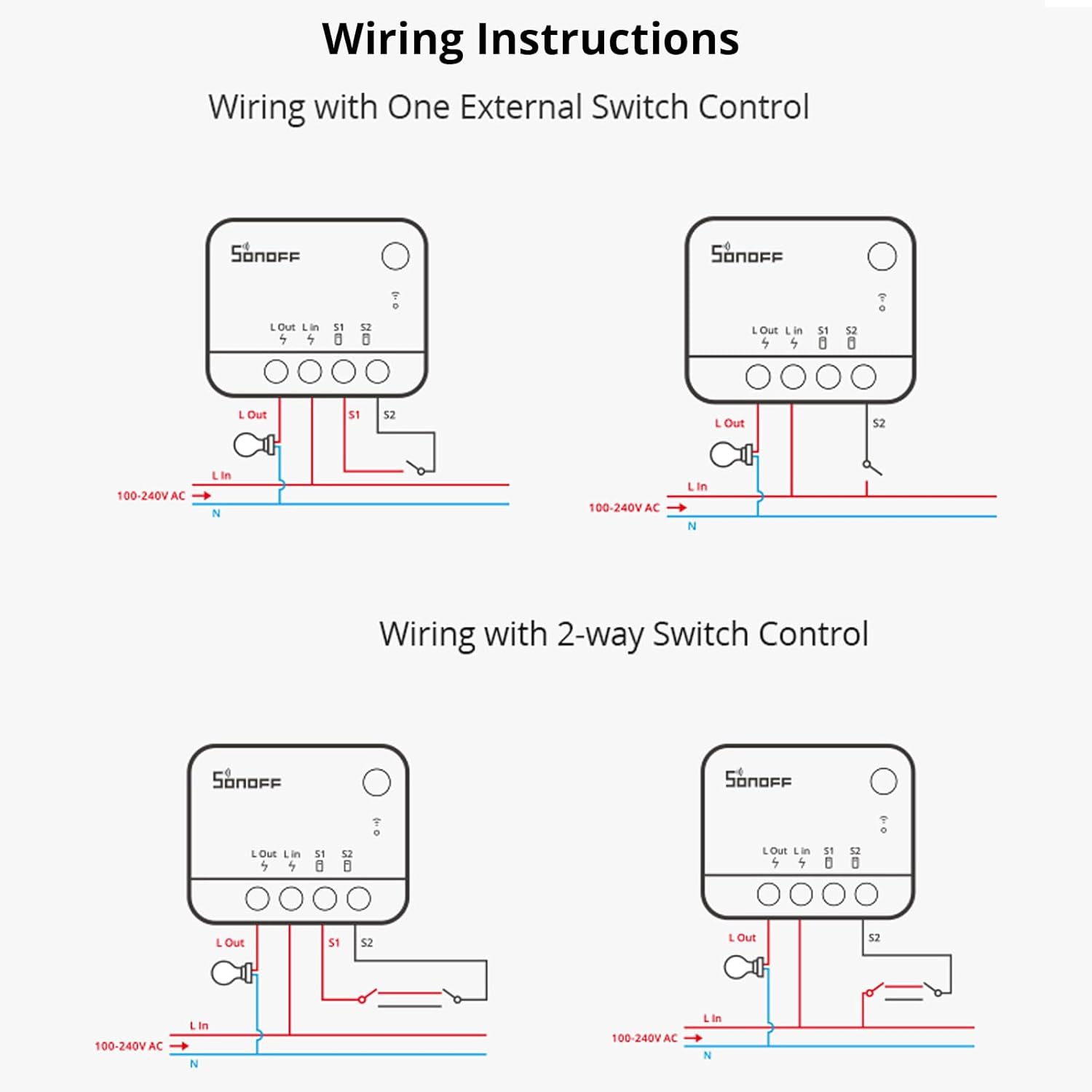
On the wiring itself, opinion splits again. Mr B Cee, no electrician, managed it "with basic diy skills it was really easy with excellent instructions!" PJ Online disagrees: "the instructions are crap and very small". Rowena's advice is the sane middle ground, which is to watch a couple of YouTube videos first. If two-way switching is your plan, read Ahmad Al-Rubaie's review closely: "you need the load wire and the live wire connected to the same switch where you fit this relay, plus 2 traveller wires to the second switch." Where the live and load landed on different switches, it could not be made to work. And if any of this sounds like a stretch, take Sam's advice: "I'd highly recommend getting an electrician in to install this".
The Dropouts Are Real, and a Zigbee Router Usually Fixes Them
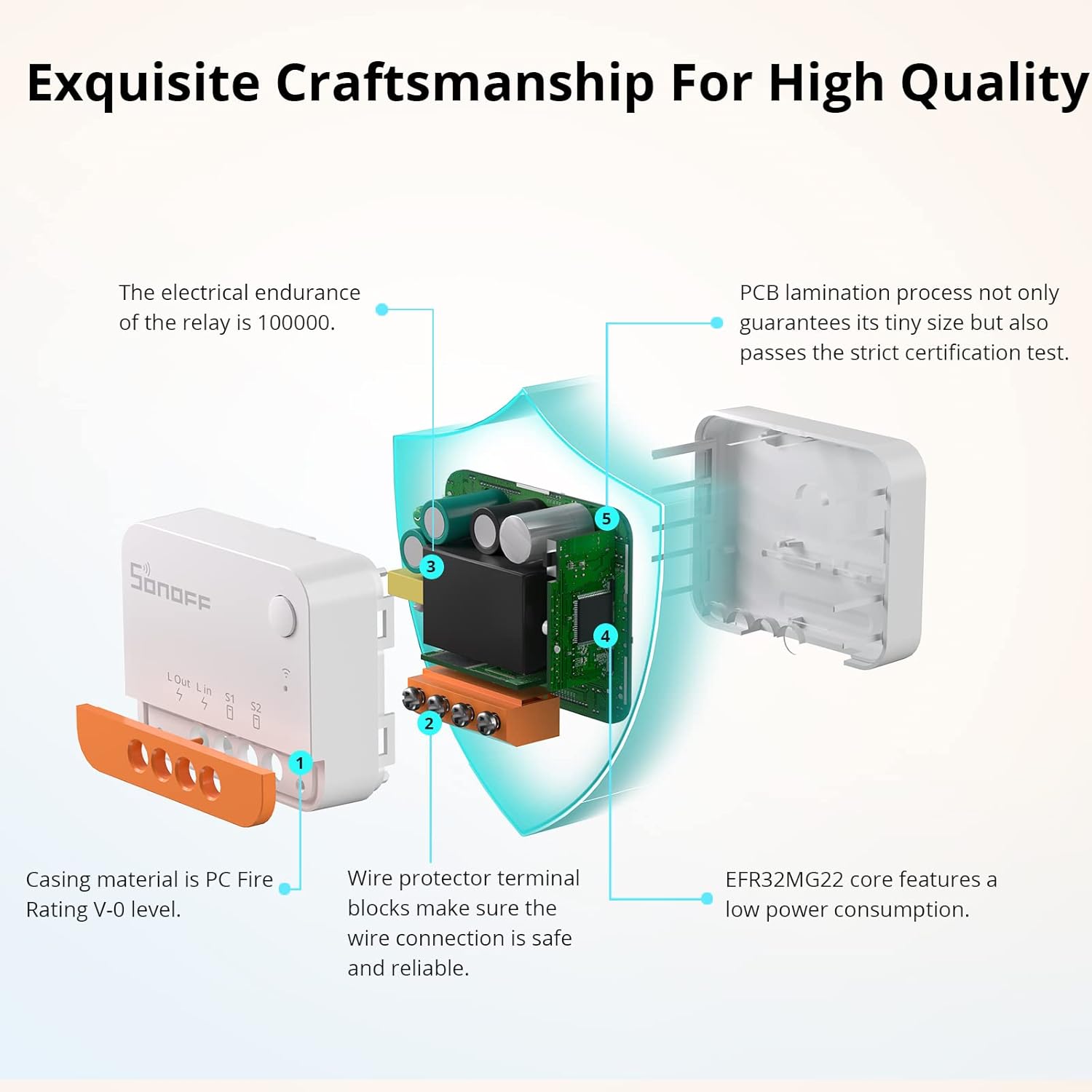
Eleven of the last hundred reviewers report the switch dropping off the network, going offline, or losing its pairing. That is the complaint that stops this being a five-star product, and it has a cause.
The ZBMINIL2 is a Zigbee end device, not a router. It will not repeat the mesh for anything else, and seven reviewers in the last hundred say so explicitly. Smart Home UK sums it up: "it won't act as a router / extender of zigbee mesh network". Anton adds the same warning: "Does not act as a zigbee range extender or repeater though". That matters more than it sounds, because a device that cannot route also tends to sit at the ragged edge of your mesh with a small antenna. Rob Jones, who sizes the unit up as "about a chicken Nugget", found the radio range compromised at distance. The Radio Vosht is blunter: "very weak zigbee signal so need router as close as possible".
The fix is documented beautifully in Gallowglass's four-star review, which reads like a lab notebook. Installed in a recessed metal pattress box at the far end of the building, it kept losing contact with the Zigbee coordinator. The solution was a mains-powered Zigbee smart plug with router functionality, placed nearby, and the update is unambiguous: "my problems with connectivity have been addressed."
That is the practical advice for anyone buying this. Budget for a Zigbee repeater within range of the switch, or accept that a thin mesh will find this module's weak spot.
Be aware it does not cure everyone. ZsiNor's two star says the drop happens regardless of hub, on IKEA Dirigera, Home Assistant ZHA and Zigbee2MQTT alike: "Zigbee network drops after a couple of months and the only real fix (even it's temporary) is to reset the device fully." w_g reports DELIVERY_FAILED errors in Home Assistant every few weeks across two units, and lands on a line that doubles as a buying guide: "If you are a happy DIYer who is happy to reset things every few weeks, you should be fine."
If a switch behind a faceplate in the hall needs an occasional reset, most people will shrug. If it is buried in a ceiling rose in a stairwell, that is a different conversation.
Living With It: The Click, the Lag and the Dimming You Do Not Get
Assume it fits and it pairs. What is it like day to day?
It clicks. There is a physical relay inside, and you can hear it. G. Hesp reports "the relay inside it is quite loud, and has a noticeable click to it". LetsShop99 shrugs: "Annoying click on switching but you get used to it." Nigel calls it "A very slight delay when using the actual switch but with a reassuring click." In a hallway or a kitchen nobody notices. Directly outside a bedroom at 6am, you will.
Speed is good, with a caveat. Konstantin Verba says "The command execution time is almost instantaneous." Fabien Goardou is more measured: "Expect 1 sec of latency". For lights, either is fine.
No dimming. This is an on/off relay. Martin J. Hamilton flags it as the one limitation: "The only limitation is the lack of ability to dim the light but on/off works perfectly". For some buyers that is the selling point. Mark had been hunting for exactly this: "Finally found a no-neutral smart switch that isn't just a dimmer".
Your dumb switch keeps working. This is the feature that wins households over. The module sits behind the faceplate and the original switch carries on doing its job, so guests, kids and the smart-home sceptics can flip it as normal. As rich puts it, "the physical dumb switch remains functional which keeps the luddites in my family happy too!" Steven M W agrees: "You can still use your old light switches for on and off", with voice control on top.
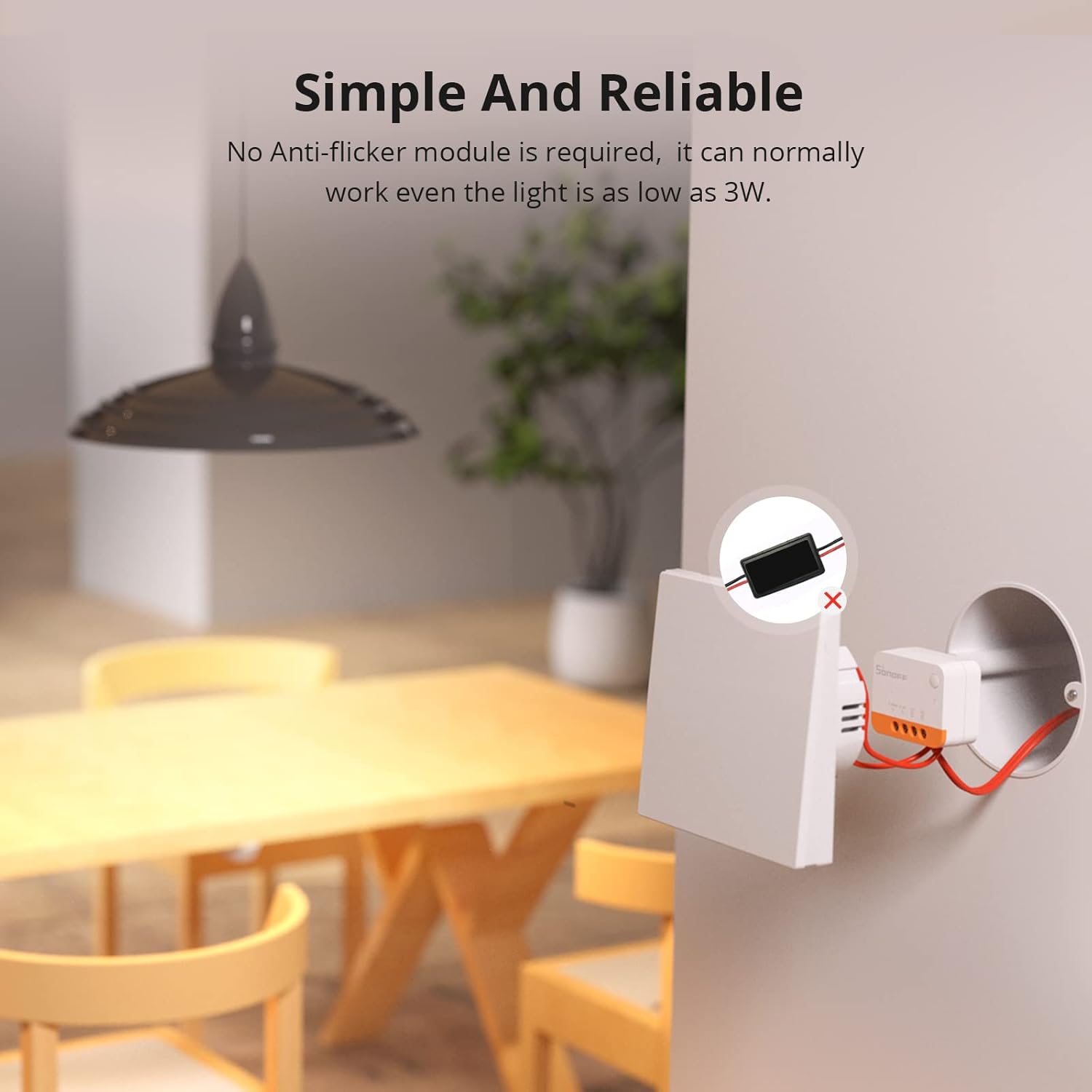
Very low wattage lights are the edge case. SONOFF claims it drives loads as low as 3W with no anti-flicker module needed, and the reviews suggest that floor is real rather than conservative. Daniel's two star found out the hard way: "if the lights you intend to control consume lesser than 3W the smart device will not work and will flicker the lights". Martin B, by contrast, praises it for not letting a trickle of ghost current bleed through to the bulb the way rival no-neutral modules do, noting that "this has none of these issues". One SmartThings user did see a mild version on an LED flood light, with "about a quarter of the LEDs remains ON at low power when switched OFF, (zombie effect)".
Power users, read the small print. The listing covers countdown, scheduled and loop timers, plus Alexa and Google Home voice control, and that is all present. But it does not support Zigbee binding, which slicktester flags after a year of use: without it you cannot set up switch-to-light control that survives your hub going offline. And PJ Online found a specific automation gap: "The ZBMINIL2 does not support the onWithTimedOff command, so if you want to use it with an Ikea Tradfri PIR or similar, it won't work."
One Listing, Several Pack Sizes: How to Read the Bad Reviews
Before you take the scariest reviews at face value, know how Amazon stacks them. This page pools reviews across pack sizes. You are buying the 2-pack, but reviewers in the last hundred are describing four-packs, single units, and in one case a collection of eight. Four of the last hundred reviews come from the French, German and Swedish stores rather than Amazon UK.
That matters, because the most alarming complaints are quantity complaints from bigger packs. Frank, three stars: "I bought a pack of 4 and 3 were not working". Dhirajlal HALAI, one star: "I bought 4 switches and I found out 2 switches not working". Another three-star buyer: "Order a pack of 4, 1 was faulty." Nigel C's four-pack had one unit "dead from the get go" and a replacement that died five minutes after pairing. None of those are the pair you would be buying, but they come off the same production line, and the two-pack buyers report it too: one two-star review says simply that one works and one does not.
The longer-term pattern is the more serious one. The Radio Vosht keeps replacing them: "Roughly 6 months each in my case. I'm on my 3rd round of buying in pairs." Balázs May had one fail "after a bit over half year" of three installed. Mar's one star is blunt: "The ZBMINIL2 stopped working after two months." G. Hesp had one break after about a year with the nastiest failure mode in the whole pile: the relay could be heard clicking but did nothing, so "my lights were stuck on until I replaced it".
Set against that, plenty of owners are a year in without a problem. slicktester reports it "working flawlessly now for almost a year", and JC's review title says it outright: "Works with Home Assistant and ZHA. All working well after 1 year."
Two things follow from this. Test both units on the bench before you seal them into a wall. And do not repeat the mistake of the one-star buyer who bought them, left them in a drawer, and only tried to install a month later: "Return window has closed so I’m stuck with a useless unit and can’t even get a refund."
Smart Light Switch With No Neutral Wire UK: Who Should Buy This SONOFF
Buy it if:
- You already run Home Assistant, SmartThings, a SONOFF bridge, or a recent Echo with Zigbee built in
- Your back box is 35mm or deeper, or you are happy to fit a spacer plate
- You want the existing wall switch to keep working for everyone else in the house
- You have a mains-powered Zigbee router or repeater within reasonable range of the switch
- You want local control that keeps working when your broadband does not
Skip it if:
- Your smart home runs on a Philips Hue Bridge, because it will not pair, full stop
- You have no Zigbee hub and do not want to buy one, in which case the WiFi Shelly 1L is the better call
- Your back boxes are shallow 25mm units packed with wiring and you cannot change them
- You want dimming, or your lights draw under 3W
- You need the module to double as a Zigbee repeater, because it will not
- It is going somewhere you cannot easily reach again, like a sealed ceiling void
Our verdict: 4 out of 5. As a piece of engineering this does something almost nothing else manages at the price: full smart control at the switch, with no neutral, no battery, no internet dependency, in a body small enough to hide behind the faceplate while the old switch carries on working. For the twenty five reviewers running it on Home Assistant, it is the cheapest way to make an old house smart without pulling up floorboards.
What holds it back from a higher score is a reliability tail that is too long to wave away. Dead units out of the box, a handful of switches that quietly wander off the Zigbee mesh, and a few owners on their third round of replacements. Buy a Zigbee repeater at the same time, test both units before they go in the wall, and put them somewhere you can reach. Do that, and this is the module to get.
SONOFF ZBMINIL2 Zigbee Smart Light Switch (2 Pack, No Neutral Wire Required)
A matchbox-sized Zigbee relay that hides behind your existing faceplate, needs no neutral wire and no battery, and leaves the wall switch working exactly as it did before. Pairs with Home Assistant, SmartThings, a SONOFF bridge or a recent Echo.