Dash Cam With Interior Camera for Taxi Drivers UK: Can the IIWEY N5 Show a Face at 2am?
A front-and-rear dash cam records the car that cut you up. It does nothing about the passenger behind you at one in the morning who decides the fare was never agreed. The IIWEY N5 turns two infrared cameras inward to cover the cabin, and whether that is enough comes down to what those lamps actually show once the streetlights run out.
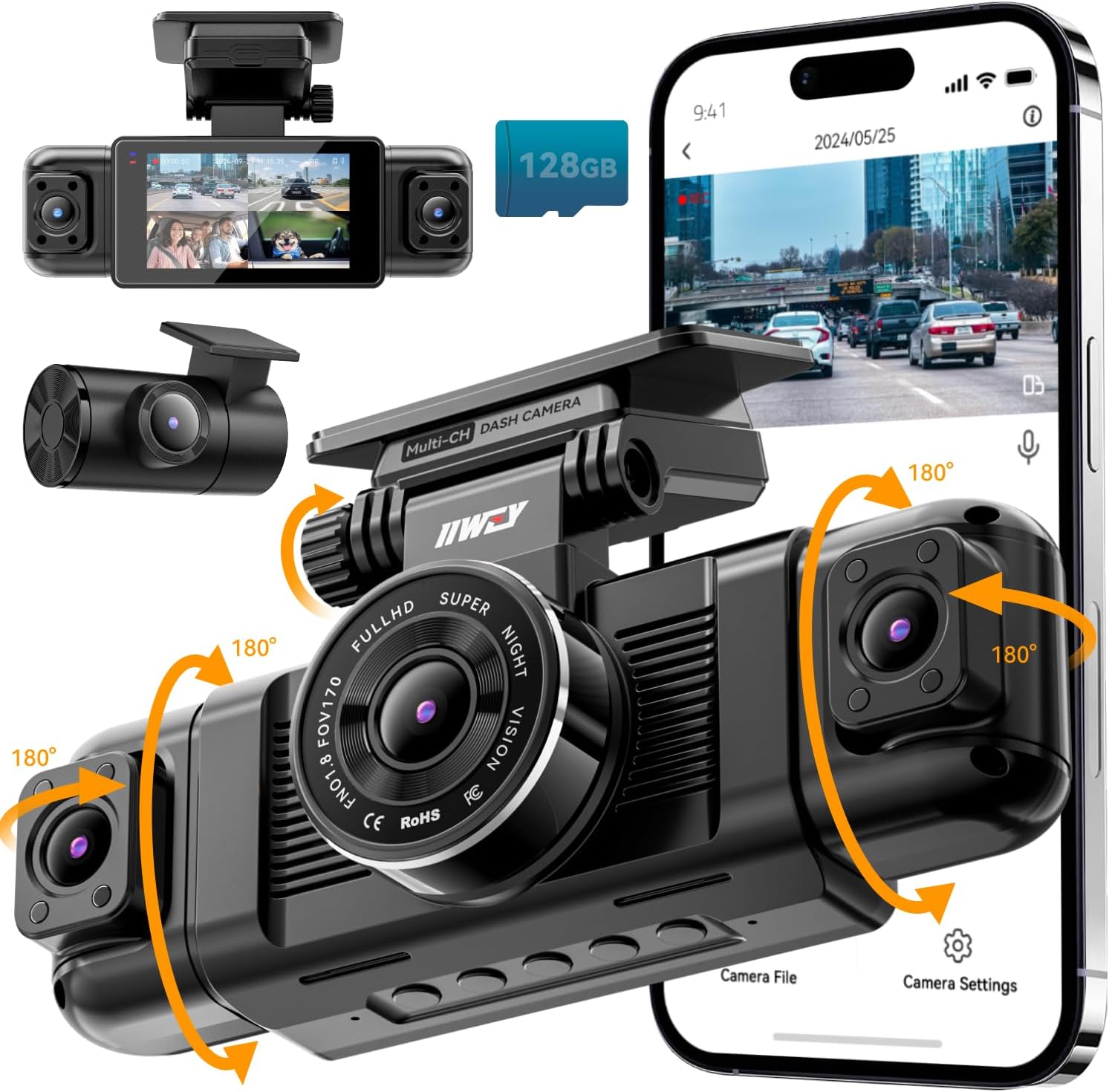
- It Does Not Have One Cabin Camera. It Has Two Side Cameras, and They Carry All Eight IR Lamps.
- A Dash Cam With Interior Camera for Taxi Drivers UK Lives or Dies on the Night Footage
- Four 1080p Channels, or One 4K Channel. You Do Not Get Both.
- On a Ten-Hour Shift, the SD Card Is the First Thing to Break
- Parking Mode Is Sold Separately, and Some Fitters Will Not Touch It
- The Failure That Should Worry a Cabbie Most: It Stops Recording and Says Nothing
- Three Drivers, Three Different Answers
- Buy It Like a Cabbie, Not Like a Commuter
Ask a cabbie what they actually want on camera and it will not be the roundabout. It is the back seat. Road-facing footage matters when the insurer starts asking questions, but the incidents that keep drivers awake happen inside the car: the fare that was suddenly never agreed, the passenger who turns nasty at closing time, the complaint that lands a week later with nothing to set against it. A front-and-rear dash cam, the kind stuck to most windscreens in Britain, is pointing the wrong way for every one of those.
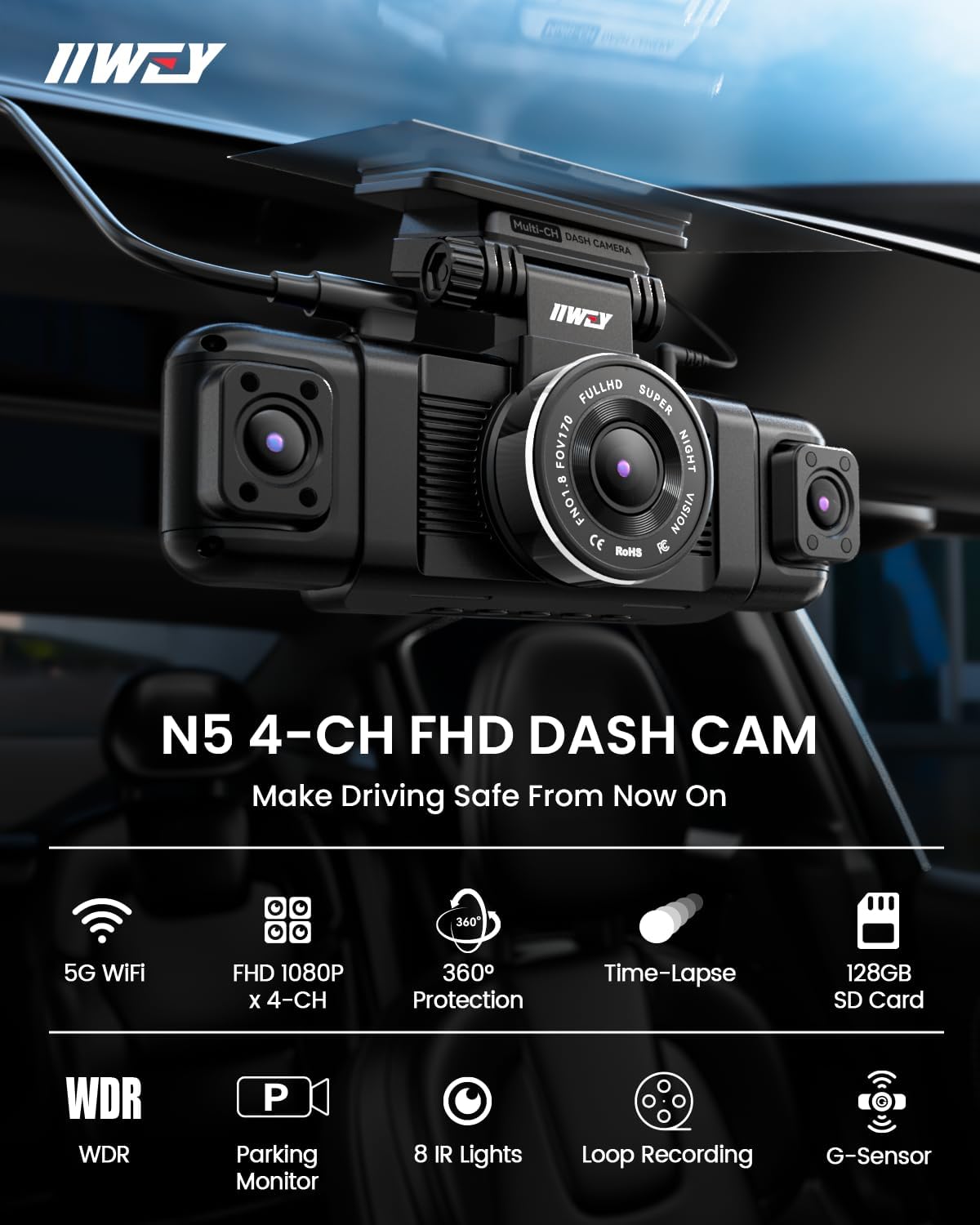
The IIWEY N5 is built for the other job. Four channels: front, rear, and two side cameras carrying eight infrared lamps between them, covering the cabin as well as the road. It holds 4.3 stars across 4,220 Amazon UK ratings, which sounds settled until you read the recent run, where the 100 newest reviews average 4.05 and eighteen of them are one-stars.
So we have organised this around who is actually buying it. The licensed taxi or private-hire driver working nights. The part-timer doing a few rideshare or delivery shifts a week. And the ordinary motorist who wanted front-and-rear, got sold four channels, and may be paying for two cameras that will never film anything worth watching. Each gets a different answer, and all three hinge on one question: whether the infrared footage from inside the cabin is any good after dark.
It Does Not Have One Cabin Camera. It Has Two Side Cameras, and They Carry All Eight IR Lamps.
Most people arrive at this category with a mental picture: a cabin camera is a second lens on the back of the main unit, pointing down the length of the car at whoever is sitting behind you. That is not what the N5 does, and getting this straight before you buy will save you a lot of grief.
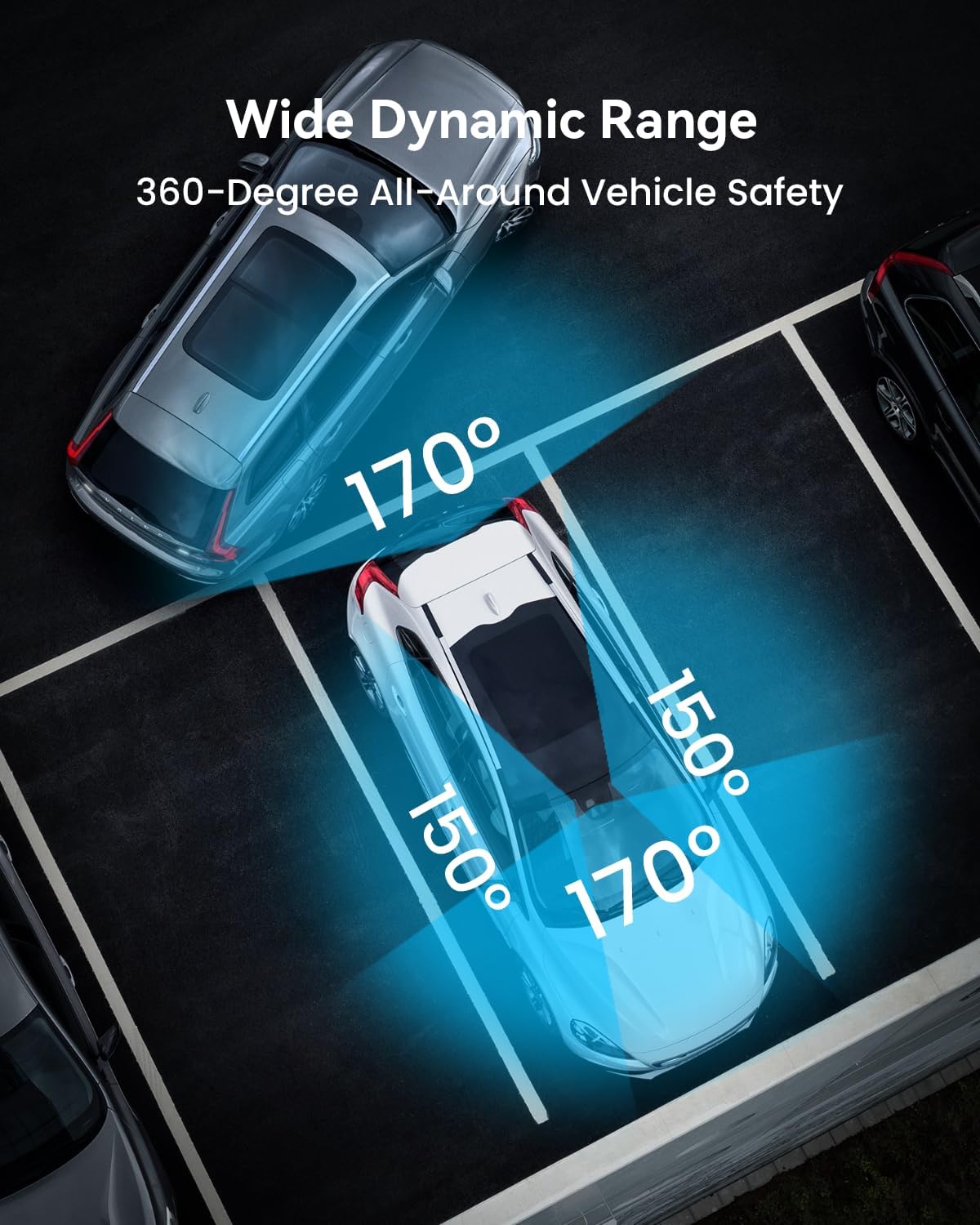
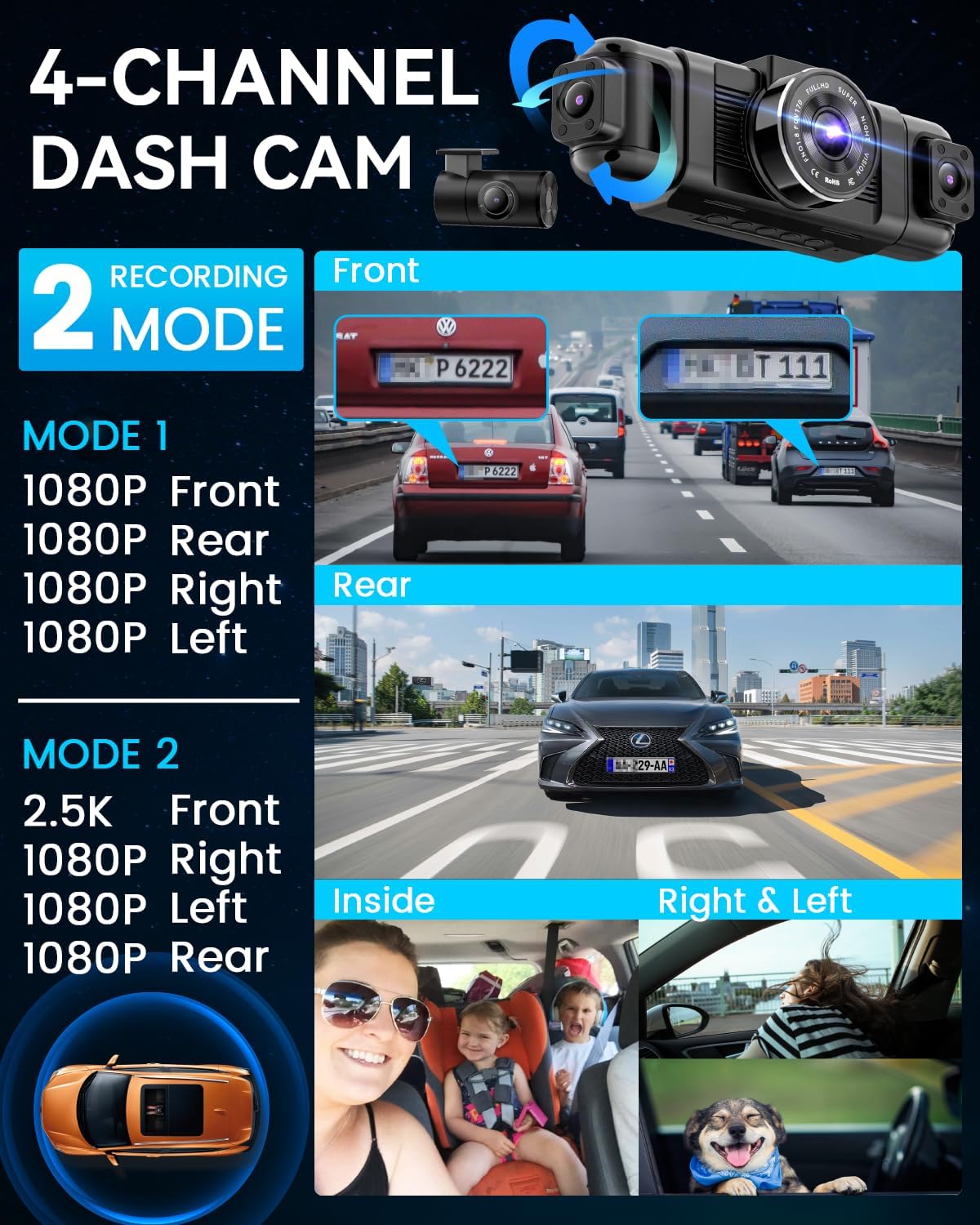
The main unit carries a 3-inch IPS screen and three lenses. The front camera looks out through the windscreen at 170 degrees. The rear camera runs on a cable to the back window, also 170 degrees. The two side cameras sit on the same body at 150 degrees each, and they are the ones carrying the infrared. The listing's own wording: the side cameras have "EACH with 4 IR LIGHTS", which is where the eight lamps come from.
Ek (5 stars) describes the geometry better than the product page does: "It's got 3 cameras on the front piece ( 1 front 1 left 1 right ) the left and right face inwards to capture outside through passenger windows." Tan (5 stars) reports being able to re-aim those side units: "the two smaller cameras at either side gives the option of adjusting them to any direction. We have the right hand smaller camera pointing towards the driver door, especially useful when it's in parked mode." Worth knowing that comes from an owner rather than the spec sheet. The listing only commits to a bracket that swings 90 degrees and a rear camera that turns 360, and says nothing at all about aiming the side lenses independently, so do not plan your coverage around Tan's arrangement until you have the unit in your hands.
What that means in a working cab: you do not get one clean shot down the cabin. You get two wide-angle views from up by the mirror, one sweeping down each side of the car, which between them cover the front seats, the door line, a good part of the rear bench, and whatever is happening outside each side window.
That second part is a bonus a dedicated cabin cam cannot give you. Neil scully (5 stars) got his money back on it in one incident: "some one pulled out from the side said I cut him up till we played back cam footage hadn't a leg too stand on side camera picked him up perfectly normal dash cam would have missed it five star from me."
Now the catch, and it is a serious one if the cabin view is the reason you are buying. Those side cameras live on the main body, tucked up behind the rear-view mirror. ian (4 stars) had his professionally fitted and the mirror ate one of them: "I can see the camera front, rear and the camera to the left as the mirror is blocking the camera on the right." Lose a side camera to your own mirror and you have lost half your cabin coverage without ever knowing it. Sit in your driver's seat and work out where this unit is physically going to sit before you order it.
A Dash Cam With Interior Camera for Taxi Drivers UK Lives or Dies on the Night Footage
Daytime cabin footage is easy. Any camera with a lens manages it. The question that decides this purchase is the 2am pickup on an unlit residential street with the interior light off and someone in the back who has had a long night. That is where a cabin camera either does its job or turns out to be decoration.
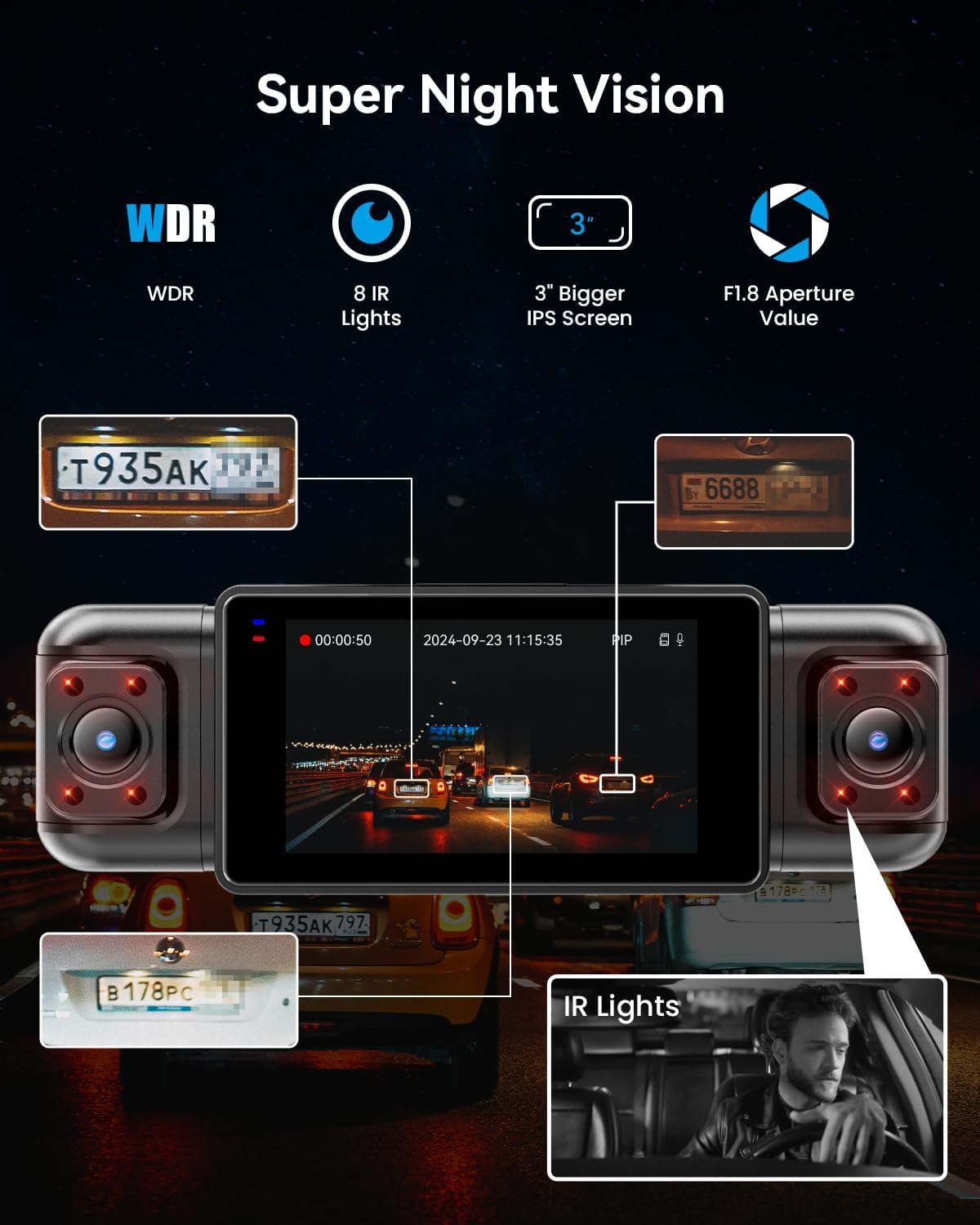
The mechanism, in the listing's own words: the side cameras "activate IR mode in low light for clear black-and-white recordings, capturing details like license plates and faces". Two things worth pulling out of that sentence. The lamps supply their own light, so the camera is not depending on a streetlight or your interior bulb, which is the entire point. And it is black and white, which is easy to skim straight past and is a real limitation. You will get a face. You will not get the colour of the jacket.
On whether that face is actually usable, the reviews are unusually consistent. MZ (5 stars) is the most specific: "It has eight infrared lights that make the inside of the car look bright on screen, so night-time footage is clear and easy to see." Faisal Hashim (5 stars) says the IR works "surprisingly well, even in complete darkness". Al (5 stars) describes "a ring of eight discreet infrared lamps that switch on without any fuss". Tiffany Thomas (5 stars): "Its so clear even in the dark and covers all of my car."
But the review that carries the most weight here is Chelsea's, and it carries it precisely because she only gave the thing three stars. She had two specific, well-argued complaints about the WiFi. She still closed with this: "Apart from that the night vision is really good very easy to see and the sound quality is good too." A critic conceding the night vision counts for more than a five-star saying everything is lovely.
Her mention of sound is the other half of this for anyone carrying passengers. In a fare dispute, what was said is usually the entire argument, and Chelsea is the reviewer confirming the audio comes through cleanly alongside the picture.
Then there is Elsem (5 stars), the only reviewer in the sample of 100 who says they drive a taxi for a living, who had already run IIWEY's two-way camera in a private car and moved up to this one specifically for the cab: "I'm a taxi driver, and the dash cam is a crucial tool in our business... The interior and exterior recordings are excellent." Umer (5 stars) titled a five-star review "Even better for taxi services".
So on the one question this whole product exists to answer, the evidence lines up: a taxi driver, a critic, and the most detailed reviewers in the sample all say the interior infrared is usable after dark. This is the part of the N5 that works. The fair caveat is that nobody posts a still frame, so "clear enough to identify someone" is a reviewer's judgement rather than a measurement, and the side channels doing the cabin work record at 1080p whichever mode you pick. Which brings us to the trade.
Four 1080p Channels, or One 4K Channel. You Do Not Get Both.
Understand this trade before you compare the N5 with anything else on Amazon, because it is the whole ballgame.
The listing offers two modes: all four channels at 1080p, or 2.5K on the front with 1080p on the other three. There is no setting where the road footage matches a premium single-lens camera, because the processor is splitting its attention four ways. That costs you pixel density exactly where you want it, on distant number plates.
The reviewers split accordingly. Rob P (5 stars), seven months in, says "Video quality is good enough to clearly read number plates." Bomorse (1 star) says the reverse: "The picture quality is poor, it crashes and lags. Numberplates are mostly illegible." Ray Long (4 stars), the most upvoted four-star in the sample, lands in between: "with 4 cameras the picture is a bit small, though you may be able to change it to single front at a touch."
That spread is what 1080p spread across four channels looks like in practice. The car in front, the vehicle beside you, a plate at a junction: fine. A plate three cars back in the rain: do not count on it.
Against the standard front-and-rear 2-channel, the type already stuck to most windscreens: the N5 costs more and buys you the two things a 2-channel physically cannot do, side coverage and an infrared cabin view. If you carry passengers, a 2-channel is not really competing with this, it is just missing the feature you need.
Against the premium 4K single-channel names, Nextbase being the UK default most people picture: they will beat the N5 on road footage, comfortably. They will read a plate the N5 loses. What none of them will do, at any price, is film your back seat in the dark. Ray Long owns a Nextbase and said this anyway: "I will probable Change my nextbase in my Hyundai Ioniq for one of these now." He rated the N5 four stars, not five, and still said it.
So the question is not which camera has the better picture. It is which picture you actually need. If your risk is a collision at 60mph, buy the 4K. If your risk is what happens two feet behind your head at 2am, no amount of 4K helps you, and the N5 is one of very few cameras at this end of the market that even attempts the job.
One warning about the reviews themselves. At least one five-star, M.junaid, describes the front and rear cameras as recording "in 4K" and adds that "GPS is embedded and watermarked, adding an extra layer of security". The listing claims neither of those things. It tops out at 2.5K on the front channel, runs the other three at 1080p, and does not mention GPS anywhere on the page. That review is describing a camera this is not. If 4K road footage or a GPS-stamped speed and location trail is the reason you are reaching for your card, do not buy this one on the strength of it.
On a Ten-Hour Shift, the SD Card Is the First Thing to Break
Read this section twice if you drive full-time, because it is the limitation private motorists never notice and cabbies hit inside a week.
Four channels record at once. Four streams of 1080p onto one card. The listing bundles a 128GB Micro-SD, says it supports up to 256GB, and runs loop recording that automatically deletes the earliest footage once the card is full.
For the school run, that is fine. For a ten-hour shift, it is the problem. Malik (4 stars) puts it in one line: "4 side recording and SD card full within hours must be option to choose which side record." He wants to switch channels off to save space and the camera will not let him. And Elsem, the taxi driver, lists exactly one complaint against an otherwise glowing five-star: "The only issue is the limited SD card capacity."
Two independent reviewers, one of them a working cabbie, raising the same thing. Think about what that means for your shift. An incident at the start of a long night can be overwritten before you get home.
The G-sensor is supposed to catch this. On a sudden impact it fires an emergency recording and locks the clip so loop recording cannot touch it. That covers a collision. It does not cover a passenger dispute, because an argument in the back seat does not trip a G-sensor. That footage sits in the ordinary loop with everything else, waiting its turn to be deleted.
Which makes one habit non-negotiable if you are buying this as evidence kit: pull the clip the same night. Not the same week. And buy up to the 256GB the listing supports rather than living on the bundled card.
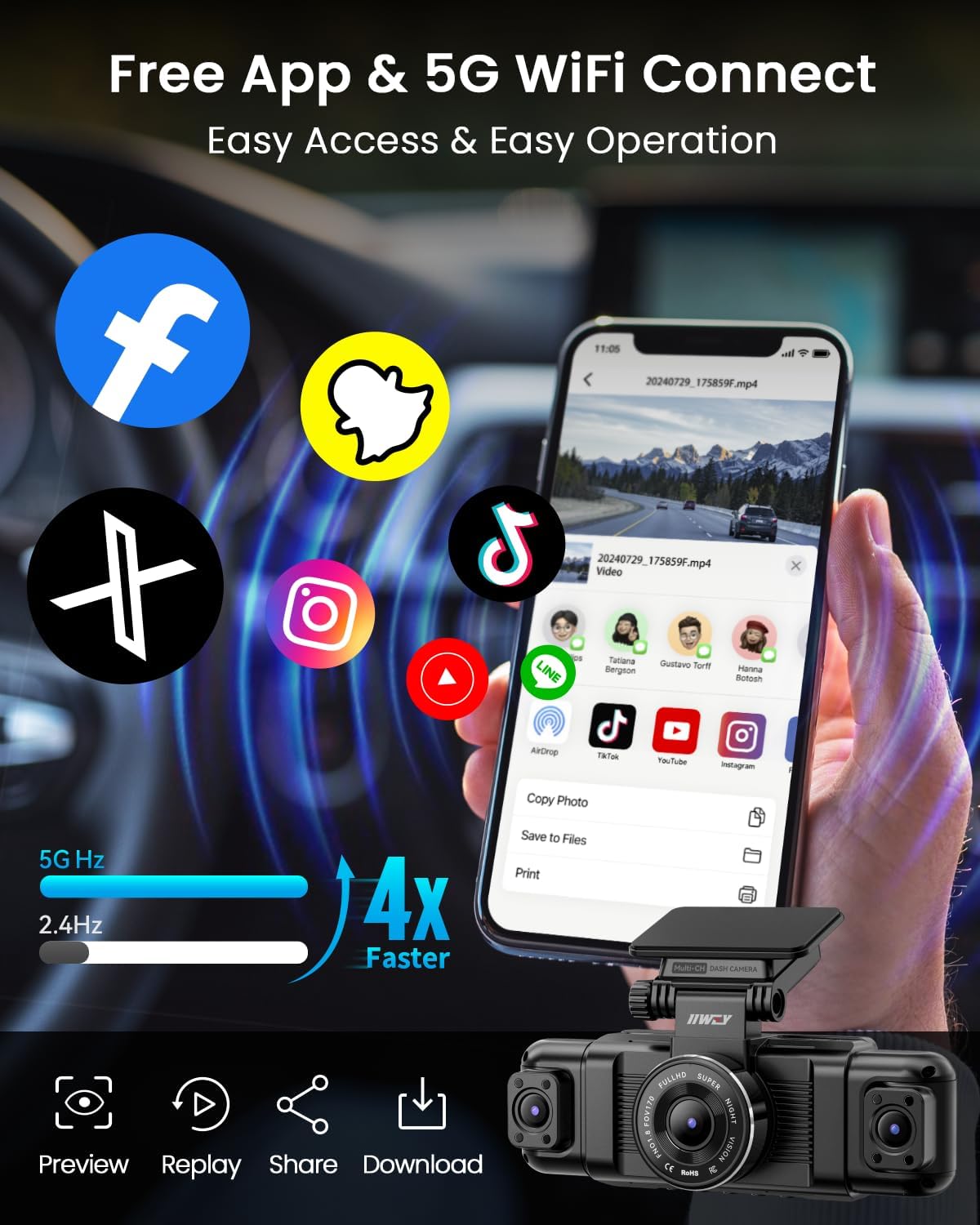
Which raises the app, because the app is how you pull it. When it works, it is quick. The N5 runs 5GHz WiFi, and Al (5 stars) reports that "by the time I have filled the kettle, the latest clip has already landed on my phone". Rob P, seven months in, says the WiFi makes it easy to connect and download.
When it does not work, it really does not. App and WiFi failures run right through the 100 most-recent reviews, and they turn up at every star rating rather than only among the people who hated it. Jody Davis (1 star), the most upvoted negative in the sample with 16 helpful votes, describes the app leaving you "stuck on loading screens". Chelsea (3 stars) has to dig into the camera's settings and switch the WiFi on manually every single time. mohammad (1 star) turns the WiFi on and "after a couple of minutes, it switches back to the closed position". Even gadgetgadgy (5 stars), who rated the thing full marks, had "yet to connect the android phone app to the unit after several attempts". For a driver who needs a clip off the camera tonight, that app is a single point of failure, and it is the flakiest part of the package.
Two more card notes worth knowing before you own one. Amir (5 stars) says the N5 "Needs to format time to time otherwise it will starts turning on and off." Jody Davis, who hated it, arrived at the same routine from the other direction: "If you format it every 7 days, You seem to have a better chance of it opening." A happy owner and an unhappy one converging on the same maintenance habit tells you something. Jody Davis also reports clips saving at 15 seconds despite setting five minutes on both the camera and the app, which, if it happened to you, would gut the exact evidence you bought this for.
Parking Mode Is Sold Separately, and Some Fitters Will Not Touch It
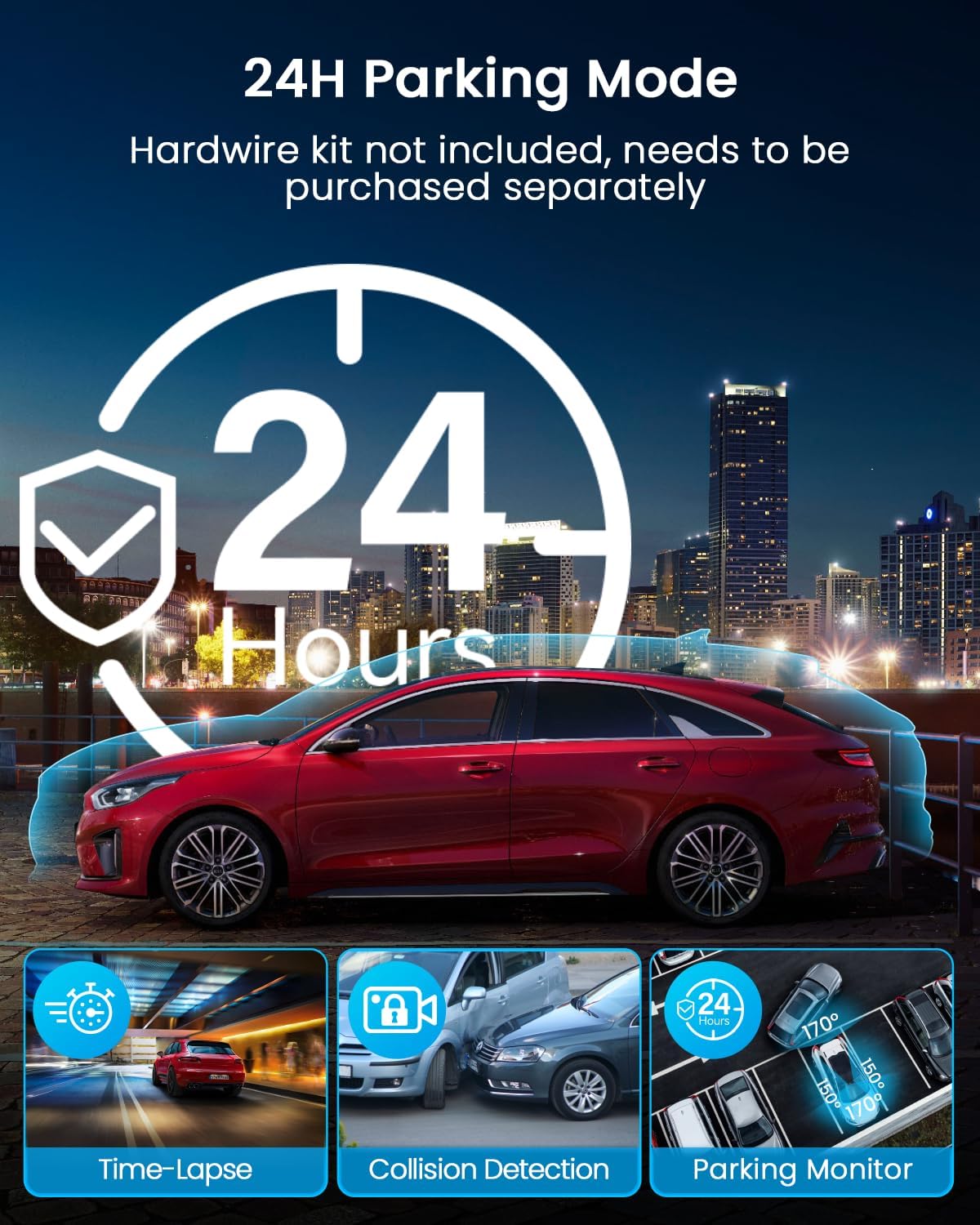
The listing advertises 24-hour parking protection in two flavours: a time-lapse mode recording at 1fps to save space, and a collision-detection mode that saves and locks a 10-second clip when something hits the car. Then, in its own bracket, in its own capitals, it tells you both parking modes require an extra hardwire kit sold under a separate ASIN.
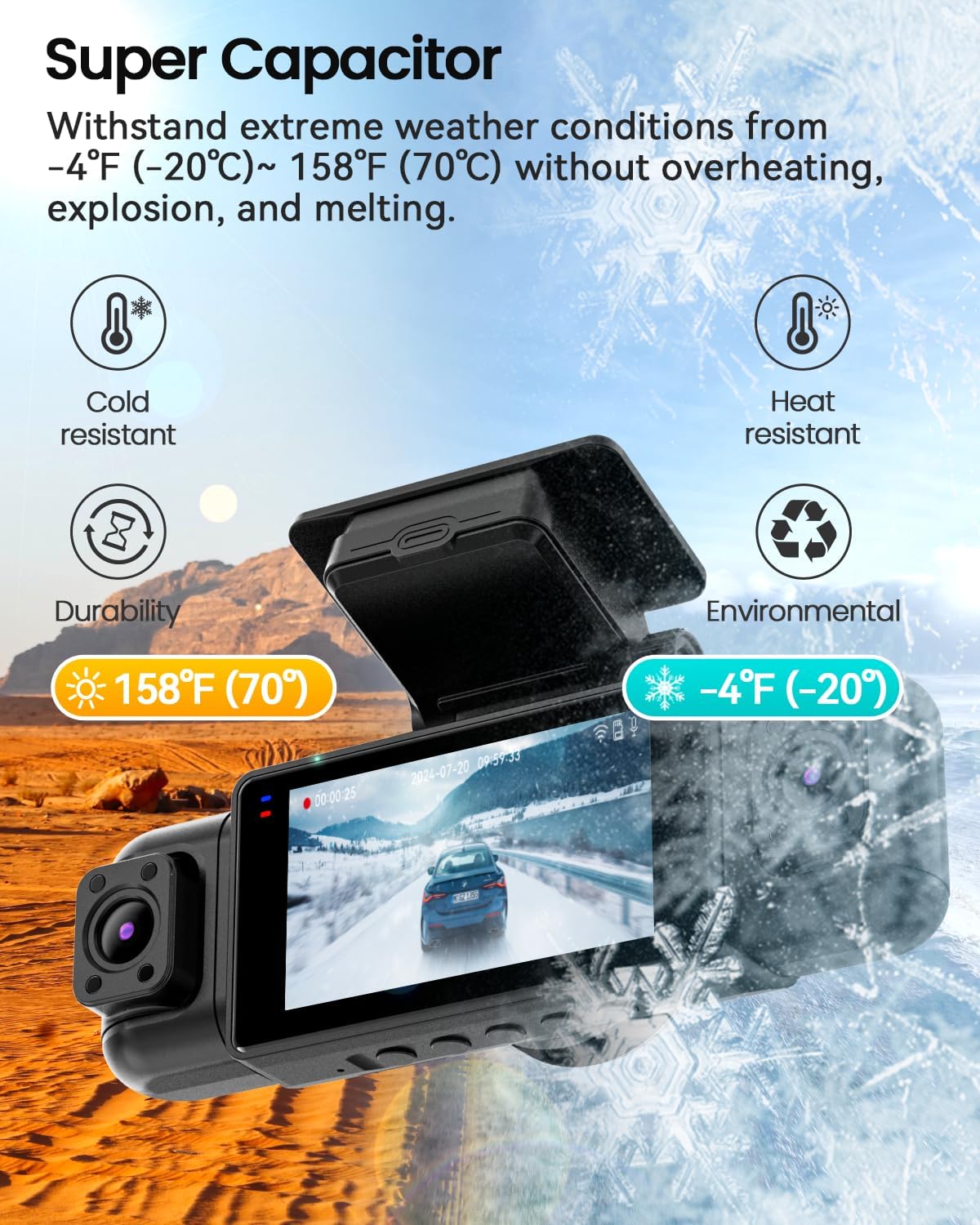
This catches more buyers than anything else in the sample. The N5 runs on a supercapacitor rather than a battery, which is the correct engineering call for a car (it shrugs off the heat that swells a lithium cell, and the listing rates it from -18C to 75C). But no battery means no power once the ignition is off, unless you hardwire it to the car.
Pardeep (1 star) captures the feeling of finding that out after the fact: "When they advertising this product they said dash cam works 24hrs but when i turn the ignition off my car camera stop recording beacause this don't have any battery its just a plug and play you need to buy a hard wiring to attach it the camera to car's battery." William (5 stars), who liked the camera, notes the same limitation without the anger: "when car is parked, the camera is turned off so if someone hits your car while it's parked you cannot see who it was." Ek agrees: "It's not 24h surveillance unless you connect it to a power bank."
Ray Long (4 stars) went hunting for the setting and could not find it at all: "it says 24 hr protection but when you go into the code to add it, it says it does not exist!" He repeats it in capitals at the end of his review.
Then the part that will actually derail you, from CBW (3 stars), who did everything right and bought the hardwire kit: "I purchased the hardwire kit with it and NO ONE will fit it. I've tried 4 different places and all have said no because these types of cameras have a tendency to break or short out and they don't want to be held responsible for that." CBW wanted overnight security because of vandalism and ended up with a camera that only works while driving.
Add up the real outlay before you commit. steveharby (1 star) itemised his: the camera, then "£20.00 Dash Cam Hard Wire Kit not supplied with camera", then "plus £120.00 fitted professionally". Teresa Girdler (2 stars) compressed it into one line: "Expensive by the time you buy the camera then hard wire pack and subscription and fitting." If your car sits on a rank or on the street overnight, budget for the kit and the fitting, and ring round fitters before you order rather than after.
On fitting generally, cable length is contested and it matters for the vehicles private-hire drivers tend to run. Khayam (5 stars) says "the cables are long enough to fit larger vehicles without hassle", and Angelina (5 stars) fitted it to an SUV with "perfect size cabels". But gadgetgadgy (5 stars) found the cigarette cable "a very tight fit on length" in a 2026 Kia Sportage, because the socket sits in the storage box between the seats, and ian (4 stars) reports that he and his mechanic "both agreed it was very tight fit". Drive a big MPV? Measure the run to your 12V socket first.
The Failure That Should Worry a Cabbie Most: It Stops Recording and Says Nothing
Everything above has to be weighed against this, because the entire case for the N5 is evidence, and a camera that quietly stops recording is worse than no camera at all. With no camera you stay careful. With a dead one you stop worrying about the problem it was supposed to solve.
sam (1 star) wrote the review every buyer in this category should read in full. He fitted it to a new car and liked it: "On checking during the first week it was ace." Three months later: "having just been involved in a non fault accident I'm now aware that it just doesn't work. Sometimes it records, sometimes (for DAYS) it doesn't. No rhyme or reason. Have reset it, formatted card, check connections etc. It's completely useless."
He found out at the precise moment he needed the footage. That is the failure mode to fear. Not a camera that dies loudly, but one that keeps its screen lit and its lamps glowing and records nothing.
The scale of it: the aggregate sits at 4.3 stars across 4,220 ratings, which is reassuring until you narrow to the 100 most-recent reviews. There, the average drops to 4.05, with seventy five-stars and eighteen one-stars. Read those eighteen and most of them are not complaining about a feature that disappointed them. They are describing a unit that died, stopped recording, or began malfunctioning. Leila Pereira's lasted two months and "conveniently went bust after the return period had expired". Saghar's: "It broke it down in one month." JAISON T KOSHY's SD card failed after a month and the camera then began "continuously restarting". Mujibullah Mohammadi got eight months before it stopped powering on at all. Nezhad Kohnehpoushi's screen "crashed very quickly", and Cogworth's had "gone blank" about two months after buying.
Look at the timings. One month. Two months. Three months. Amazon's return window is thirty days, and a lot of these failures land just the wrong side of it, which is why Leila's line about the return period lands so hard.
What happens when you ask for help is the other half of the risk. Support comes up again and again across the sample, and the balance runs heavily against IIWEY. A. Lovick (1 star): "Help line is a bot that doesn't reply." ray rubenis (1 star): "cannot get a reasonable response. So therefore l feel that their customer care is very poor." steveharby (1 star) says support "have not returned any of may request for help". Ristonclei Galli (1 star) needed one replacement cable for a dead rear camera and got no answer at all. One five-star buyer, who loved the camera, still warned: "be wary of the guarantee promise as, when I linked to register, it wasn't as promised. I have contacted them but to date no reply and it's now been over a week." Mr. Andrew R. Robinson (2 stars) found no route to a warranty claim at all.
It is not universal, and it would be unfair to pretend otherwise. Joe Ince (5 stars) says "IIWEY gave me a TWO year guarantee instead of the usual one", and Khayam (5 stars) got quick answers to his questions. But that is the shape of it: the listing promises twelve months of after-sales service, and whether you actually receive it looks like a lottery. Buy on the assumption that if this thing dies in month four, you are on your own.
The counterweight is real and should be said plainly: seventy of the last hundred reviewers gave this five stars, and Rob P is seven months in with "no complaints". The long-term positive exists. It is simply thinner on the ground than the long-term negatives.
So if you buy it, verify it is recording. Weekly, not annually. Pull the card, check the files are there, check the timestamps are right. That is sensible with any budget dash cam. With this one, make it a rule.
Three Drivers, Three Different Answers
The licensed taxi or private-hire driver: buy it, with conditions.
This is the only tier where the N5's odd four-channel geometry pays for itself. You carry strangers, you work nights, and the incident you cannot defend is the one happening inside your own car. Nothing else at this end of the market gives you an infrared cabin view plus side coverage plus front and rear on a single unit. The night-vision evidence holds up across the reviews, Chelsea confirms the audio is usable, and the only reviewer in the sample who drives a taxi for a living moved up from IIWEY's two-way camera specifically to put this one in the cab, and rated it five stars.
The conditions are not optional:
- Budget for the hardwire kit and the fitting on top of the camera, and ring round fitters before you order, because some will refuse.
- Sit in the driver's seat and check your rear-view mirror will not block one of the side cameras.
- Buy up to the 256GB the listing supports. The bundled 128GB will not last a long shift across four channels.
- Pull any clip you care about the same night. Loop recording does not care how important it was.
- Check weekly that it is actually still recording.
The part-time rideshare or delivery driver: it depends entirely on what you carry.
Split this one in half. If you carry passengers, even a few evenings a week, the logic above holds and the cabin view is the whole reason to buy. Fewer hours also means the card fills more slowly, which takes the sting out of the biggest day-to-day limitation.
If you deliver parcels or food and nobody ever sits behind you, those two infrared cameras are filming an empty back seat all night. You are paying for the one feature you will never use, and a cheaper 2-channel would give you sharper road footage for less money. Courier drivers should be looking at a good front-and-rear, not this.
The private motorist: you are probably overbuying.
If the only people in your car are people you already know, the cabin channel is dead weight. The infrared is the expensive part of this camera, and it will spend its life filming your kids arguing about the radio, which is not evidence anyone is ever going to ask for.
One qualification, though, and it is a fair one. Those side cameras are not only cabin cameras. They look out through the side windows too, and that is where Neil scully's five-star came from: a driver pulled out on him, accused him of cutting him up, and the "side camera picked him up perfectly normal dash cam would have missed it". Side coverage has value for any driver on a British roundabout. If that is what is drawing you in, then buy the N5 for the side channels and treat the infrared as a freebie. That is a fair reason to own one. Just do not buy four channels expecting 4K road footage, because that is the one thing it will not give you.
Buy It Like a Cabbie, Not Like a Commuter
The IIWEY N5 is a specialist tool being sold to a general audience, and a lot of its one-star reviews read like people who bought it as an ordinary dash cam and discovered a fiddly, four-channel, hardwire-hungry bit of kit that wants its card formatting every week.
Buy it for the reason it exists and the picture changes completely. It is one of very few cameras at this end of the market that puts an infrared eye on your back seat, and the people using it that way, including a working taxi driver, rate it highly. The night footage, which is the entire point of the product, is the thing the reviews are most consistent about. Chelsea gave it three stars and still called the night vision "really good". That is the endorsement that counts.
What stops this being a clean recommendation is reliability. Eighteen of the last hundred reviewers gave it one star, and most of them are describing a unit that stopped doing its job, several of those landing just past the thirty-day return window. IIWEY's support cannot be relied on to catch you when you fall. That is the risk you are taking on, and for evidence-gathering kit it is a real one.
So: if you drive strangers for a living, this is the camera to be looking at, and you should go in with the hardwire kit budgeted, a bigger card ordered, your mirror position checked, and a weekly habit of confirming the footage is really there. If you drive your own family to the shops, buy a good front-and-rear and put the difference somewhere else.
IIWEY N5 4 Channel Dash Cam
Front, rear and two infrared side cameras on one unit, covering the road and the cabin. Eight IR lamps light the back seat in the dark, 5GHz WiFi gets the clip onto your phone, and a 128GB card is in the box. Budget for the hardwire kit if you want parking mode.