Bone Conduction Headphones for Running UK: Is the Shokz OpenMove Enough, or Do You Need the OpenRun?
Open-ear headphones that let you hear the traffic sound like a runner's dream, and for the most part the OpenMove delivers. The question is whether Shokz's cheapest pair fits your head and lasts the distance, or whether your money is better spent a rung up the range.
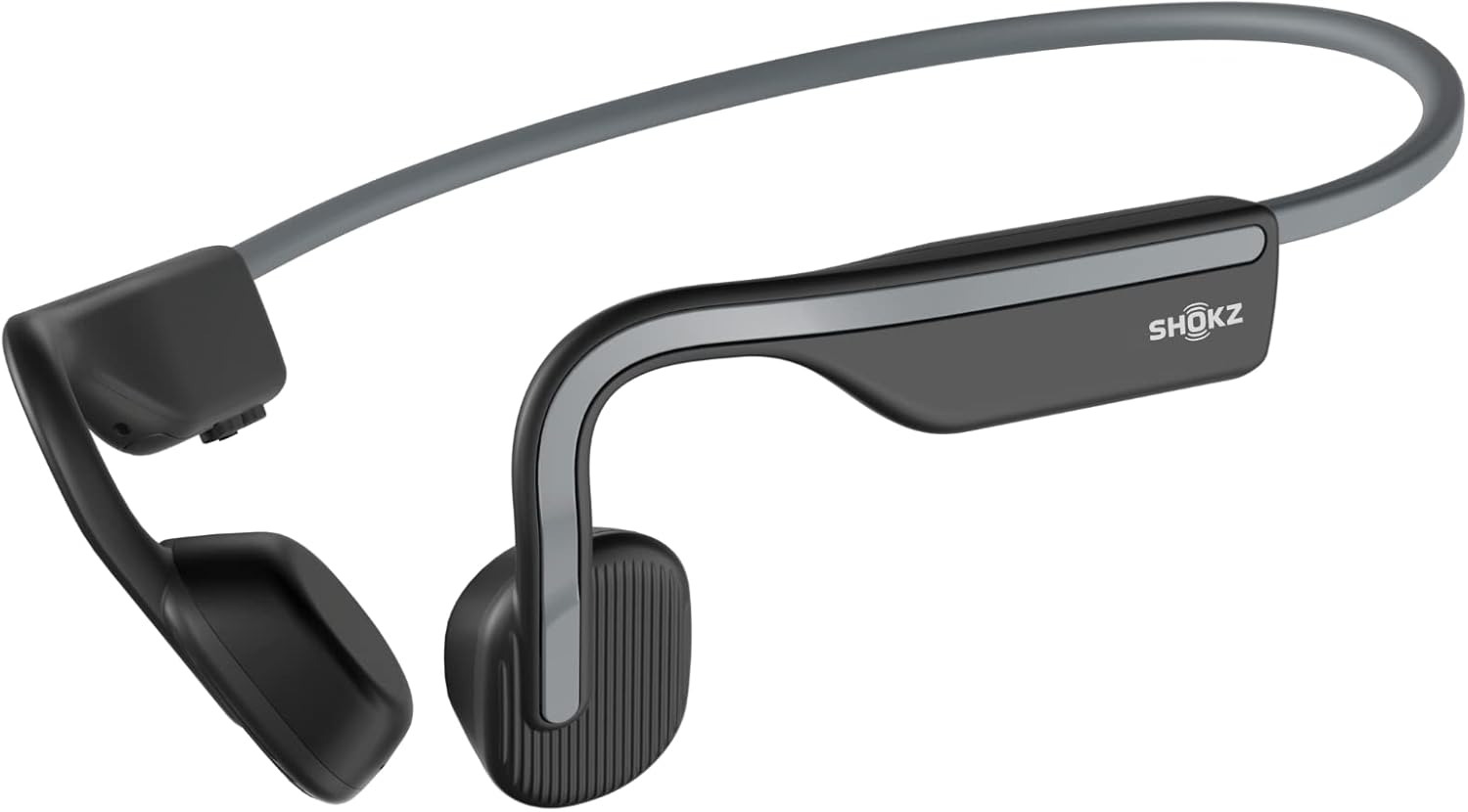
Picture a road run at dusk. You want a podcast or a playlist going, but you also need to hear the car coming up behind you before you step out to cross. In-ear buds make you pick one or the other. Bone conduction refuses to, and the Shokz OpenMove is the cheapest way into that trick from the brand that took it mainstream.
Instead of plugging your ears, the OpenMove rests on your cheekbones just in front of them and sends the sound through the bone, leaving your ear canals open to the world. UK runners have bought a lot of them. The reviews are not all sunshine, though. The lifetime score sits at 4.4 stars across more than 23,000 ratings, but the 100 newest reviews we read land a good deal lower, down around 3.6, split between people who love the road-safety and comfort and people whose pair quit sooner than a headphone at this price should. So here is who the OpenMove actually suits, and who should spend up or step sideways.
Why a Runner Picks Bone Conduction Headphones for Running Over Earbuds
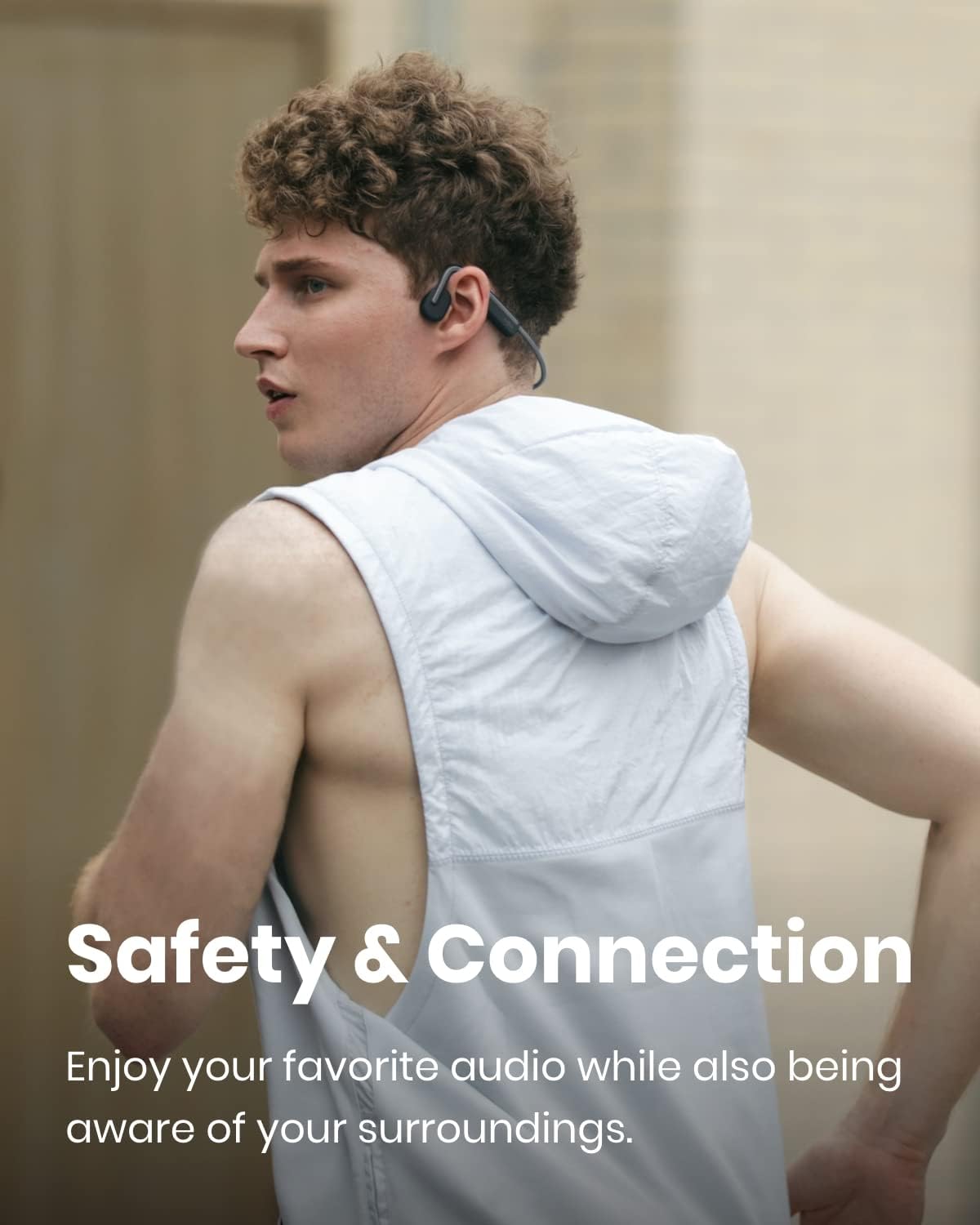
The whole case for bone conduction on a run is safety and awareness, and this is where the OpenMove wins people over in the reviews. One buyer who borrowed a friend's pair before committing summed up the appeal: "as well as my music, I can actually hear the traffic, which is a huge safety thing," adding that he could still catch "cars, birds singing, and the sound of the waves when I run along the shoreline" (Simon Uglow). Another, out on country lanes, liked that he "can hear traffic from behind when volume is at moderate level" (CCarc).
That awareness is why people who cannot get on with in-ear buds keep landing here. One reviewer bought a pair for his wife "who doesn't like running with in ear earphones" and found "the headphones don't move whilst running, you can still hear traffic and the sound quality is excellent" (Simonhandyman). They also play nicely with the rest of a runner's kit: JonnyW wears "a hat, head torch or sunglasses without them getting in the way," and glasses wearers say the same. Battery is rated at six hours, plenty for a heavy running week, and most reviewers agree, with one joking the charge "lasts longer than my motivation to exercise" (Mr S.).
Against a normal pair of AirPods or sport buds, that is the trade you are making: you give up sealed isolation and deep bass, and you keep a full channel open for the road. For running near traffic, that is the right call for a lot of people, and it is the strongest reason to choose the OpenMove over the buds already in your pocket.
The Sound: Better Than the Clones, Not a Match for Sealed Buds
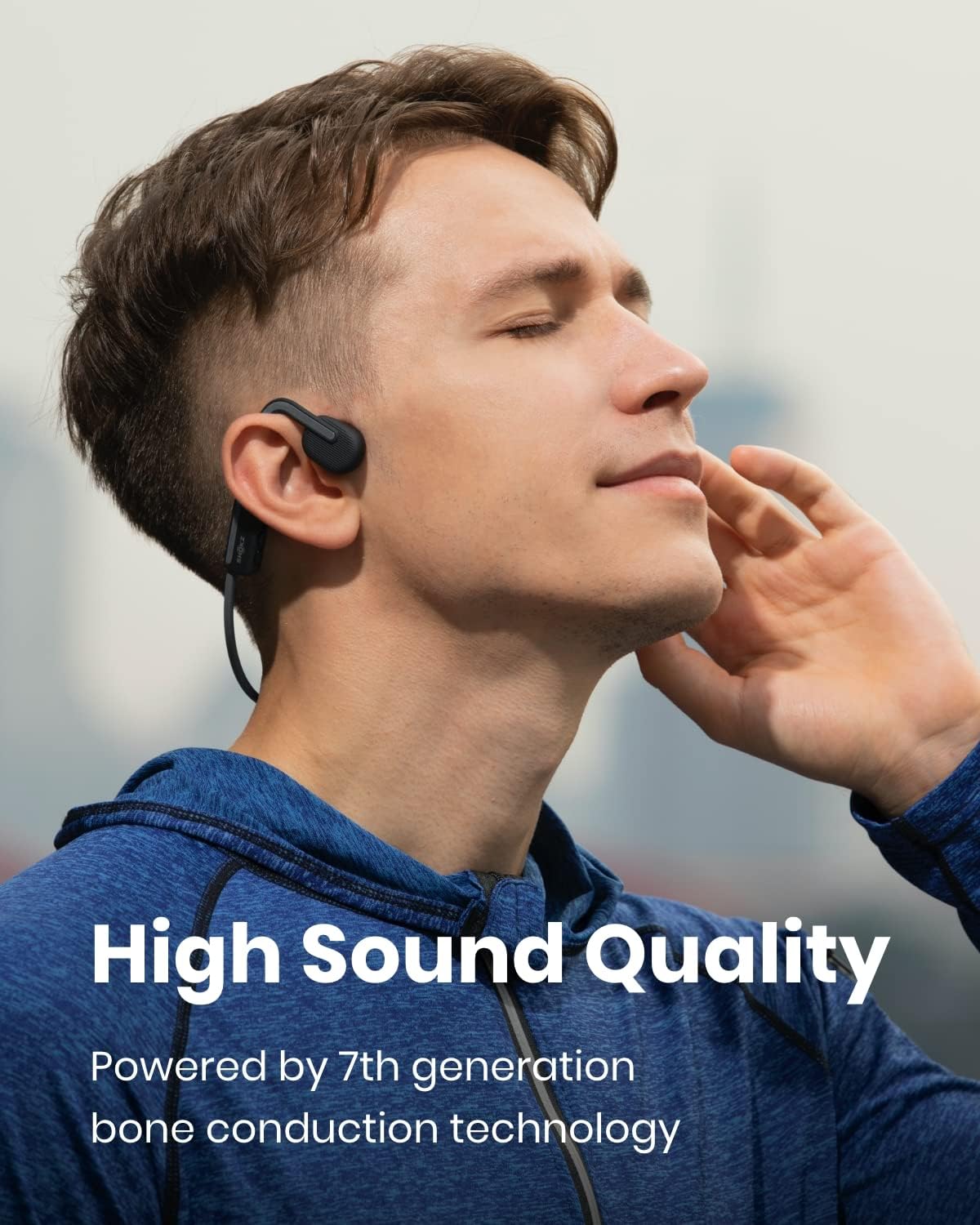
Set your expectations by the format, not by your old earphones. Bone conduction moves sound through your cheekbones, so it never lands with the sealed bass of an in-ear bud, and reviewers who go in expecting that come away flat. "If you're used to regular earphones & headphones, the sound quality from these won't satisfy you," one wrote, before adding the important caveat: "But this is one of the best in its category" (Longevity).
Judged as bone conduction, most people are pleasantly surprised. The most detailed review on the page, marked helpful by 18 readers, calls the music "surprisingly good with good trebles and mids and more bass than I was expecting," while being straight about the ceiling: the volume "is not nearly as loud as traditional phones so they can get drowned out in noisy environments" (mickey ze mouse). That is the shape of it. On a quiet towpath they sound great; on a roaring main road or a busy gym floor, traffic and crowd noise can win.
Two comparisons matter here. Against the cheap bone-conduction lookalikes all over Amazon, the OpenMove pulls clearly ahead: one buyer who "brought cheap chinese copy first" said he wished he had not bothered, because the Shokz pair sounded "so much better" (Terry Halcrow). Against sealed buds, it loses on bass and outright loudness, full stop. A small number of reviewers also felt the open design let too much sound escape, with one complaining "everyone around you can hear your music" (DGoulston). At sensible running volumes that leakage is minor, but it is real if you crank them on a quiet train.
One Band, One Size, and Whether It Fits Your Head

The OpenMove uses a single wraparound titanium frame that curves behind your head, and it does not adjust. For a lot of people that is fine, they clip them on and forget about them. For others it is the dealbreaker, and after the reliability worry it is the fit that comes up most: seven of the 100 most-recent reviews call out the fixed band being too big for their head or catching on their clothing.
The pattern is specific. If the frame is slightly wide for your head, the pads stop sitting flush against your cheekbones, and the sound suffers along with the fit. One runner explained that "the band isn't adjustable and is way too big for my head so I can't get the position right, they are too loose," which left the sound thin because the pads never sat against the face (Caroline Cooper). Another, who bought the OpenMove to replace a lost pair of OpenRun, found they "only work if I stay still. If I move they get pushed off my ears." A few also catch the rear band on a collar, a cap or a hood.
This is the clearest case for looking up the range rather than at a rival brand. More than one reviewer who found the OpenMove too big pointed at the pricier Shokz OpenRun and OpenRun Pro instead, one saying outright you are "Better off with the OpenRun Pro mini" for a smaller head (Darren). Those cost more, but the step up buys a more secure, lower-profile fit that holds at pace. If you already know you have a small head, it is worth checking today's price on the OpenRun before defaulting to the cheaper model.
The Longevity Worry the Reviews Keep Circling Back To
Now the hard part, and the reason those recent reviews drag the average down. The biggest single complaint about the OpenMove is that it stops working. More than 20 of the 100 most-recent reviews describe a set that died, stopped charging, or developed a fault, usually somewhere between a few months and a couple of years in. The failures cluster around charging and one earpiece going quiet: "8 months later the right earphone stopped working," wrote one buyer whose warranty replacement then failed the same way about ten months on (crazycaz).
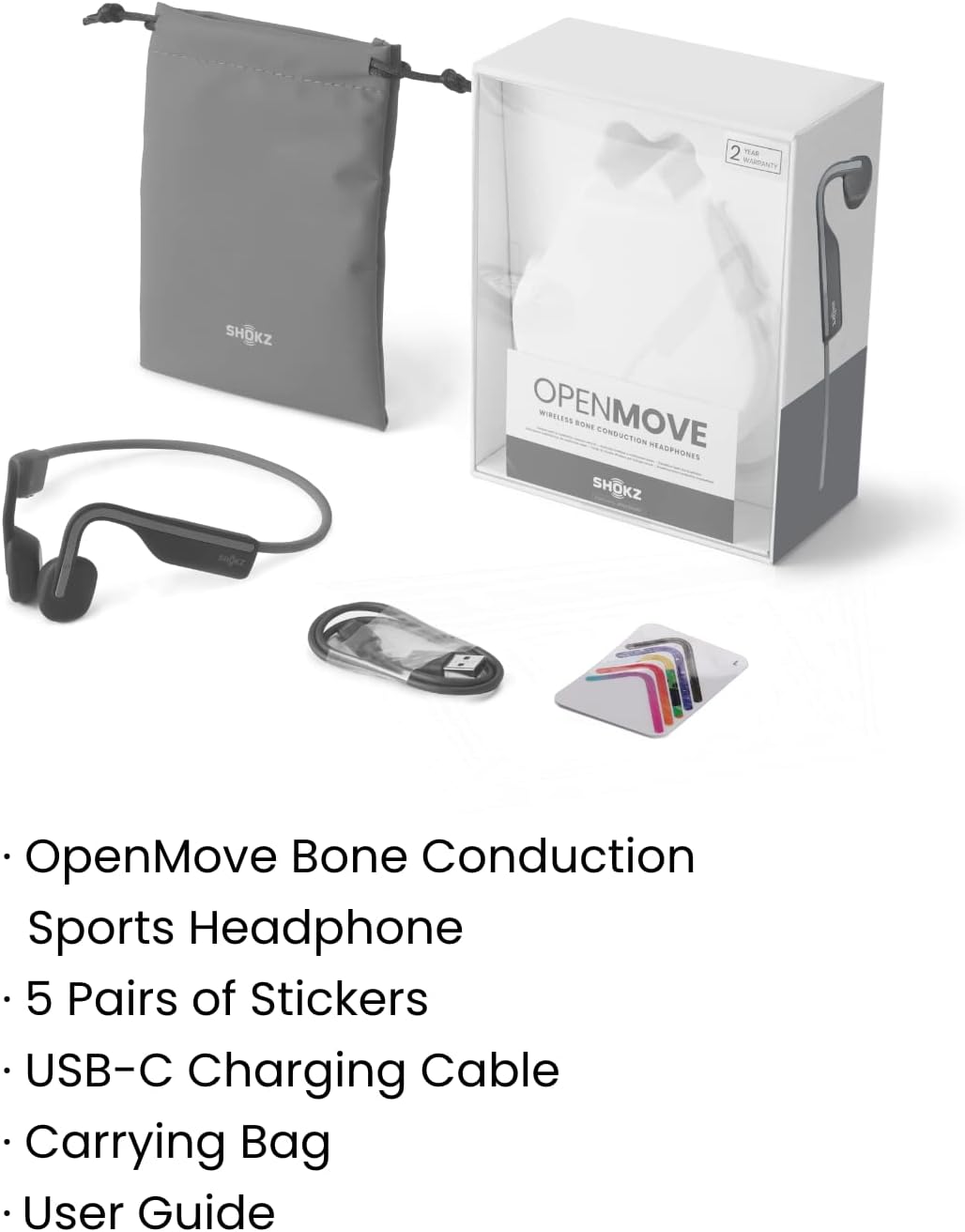
Two things stop this being a simple thumbs-down. First, Shokz backs the OpenMove with a two-year warranty, and reviewers who claimed on it mostly praise the support: one who called the reliability "shocking" still made a point of saying "the customer service is excellent and they have now replaced the 2nd pair which failed" (Chris Nicholson). Second, plenty of pairs simply work. One reviewer's set survived being left in a washing machine "and they have been through two wash cycles. They still work perfectly" (Radar), and others report daily gym or running use for a year or more with no trouble.
The wrinkle is that the warranty runs from your original purchase, so a replacement does not reset the clock, and a few runners hit the same fault twice before the two years were up (Runner86). Take the practical lesson from it: buy from a seller that makes returns easy, keep your order details, and register the warranty the day it arrives. At this price, treating the two-year cover as part of the deal rather than a nice extra is the sensible way to buy.
OpenMove, OpenRun, or Stick With Your Earbuds?

Shokz positions the OpenMove as its entry-level model, a Red Dot Award winner that also carries an England Athletics recommendation, and that is exactly how to think about it. It is the pair to buy if you want to try real bone conduction for road running or cycling without paying flagship money, you have a medium or larger head that suits a fixed band, and you value hearing the traffic over deep bass. For that buyer, at this price, it is an easy recommendation, and the reviews are full of people on their second, third or even fifth Shokz pair.
Step up to the OpenRun or OpenRun Pro if you have a smaller head or run fast enough to need a lock-tight fit, or if you simply want the best sound and features Shokz makes. Skip open-ear entirely and buy sealed sport buds or AirPods if most of your miles are on a treadmill or in a quiet gym where road awareness does not matter and you would rather have bass and isolation. Whichever way you go, buy from a seller with painless returns and register the warranty, because the one real weakness here is how long a given unit lasts.
For a first pair of bone conduction headphones for running, though, the OpenMove still does the main job better than anything at its price, and that job, keeping your ears on the road while the music plays, is the whole point.
SHOKZ OpenMove Wireless Bone Conduction Sports Headphones
The affordable way into Shokz bone conduction: open-ear sound that keeps you aware of traffic, an IP55 sweat-and-rain rating, and a two-year warranty. Built for road runners and cyclists who want their ears on the road.